
Protecting plants from a hard freeze in North Texas takes three moves in order: water deeply 24 to 48 hours ahead, then mulch the root zone 2 to 3 inches. Finally, tent frost cloth to the ground over vulnerable plants, anchored so it traps soil heat. A hard freeze, several hours in the mid-20s or below, is a different event from the season's first light frost. Tarrant County gets a handful of them most winters. Occasionally an arctic outbreak rewrites plant lists, as February 2021 did across Fort Worth and every city around it. The good news is that protection is cheap, fast, and mostly about physics. The soil is a heat battery; the job is keeping that heat around the plant instead of losing it to the wind. Here is the method, and just as important, what not to bother covering.
The Physics: Trap Soil Heat, Not Air
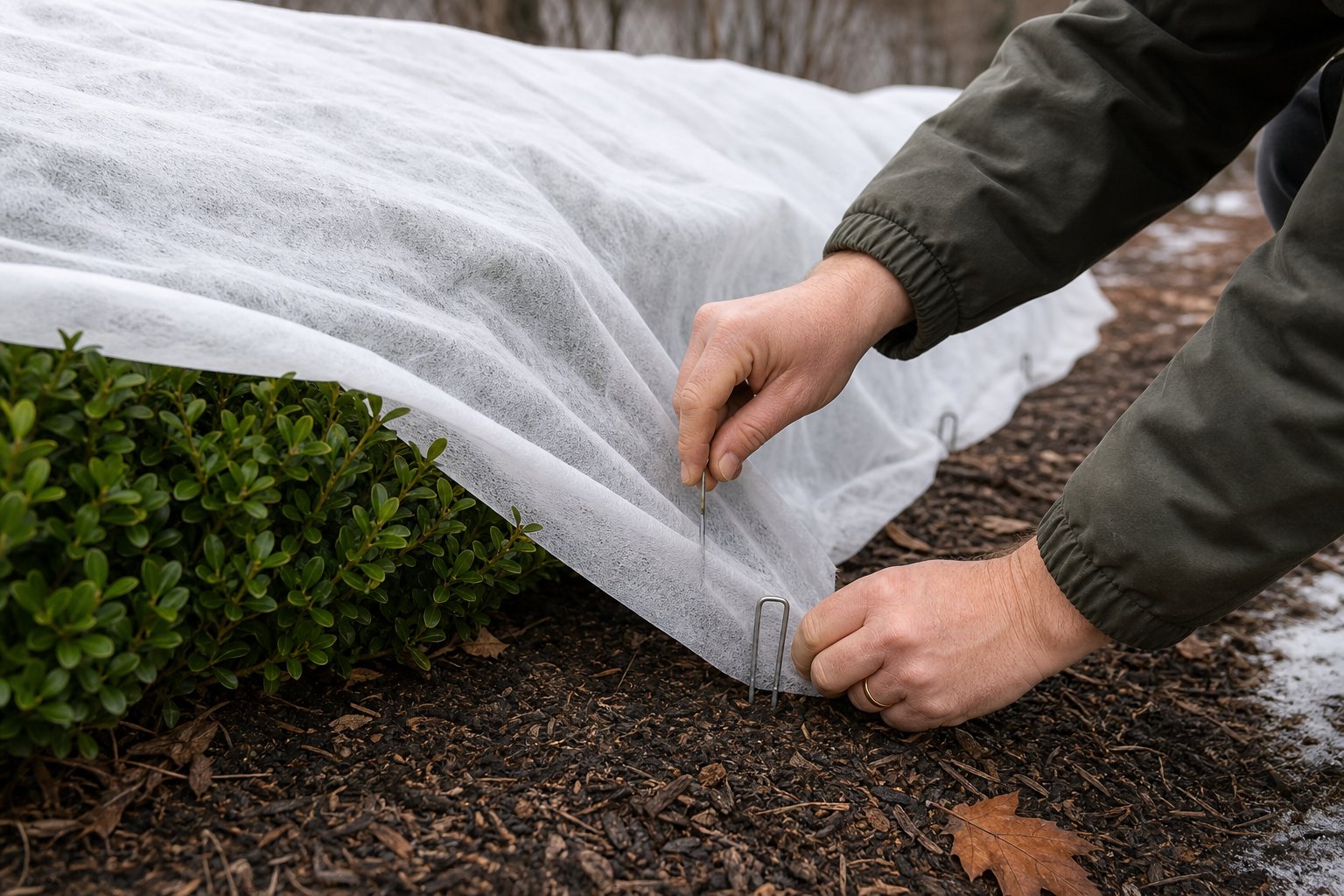
Winter soil holds warmth from the day, and on a freezing night it radiates that warmth upward continuously. Frost cloth works by catching that rising heat around the plant, which is why technique decides everything. Cloth draped to the soil line and pinned down creates a warm tent worth 4 to 8 degrees. Cloth cinched around a trunk protects nothing, because the heat source is the ground, not the plant.
Watering a day or two ahead charges the battery. Moist soil stores far more heat than dry soil, and hydrated plant tissue tolerates cold better than drought-stressed tissue. This is the single most skipped step in Keller and Grapevine yards, and it costs nothing.
Cover Right: The Frost Cloth Method
- Water the root zone deeply 24 to 48 hours before the front arrives.
- Top up mulch to 2 to 3 inches over the roots, keeping it off stems.
- Drape frost cloth over the plant to the ground on all sides, using stakes or hoops to keep it off tender growing tips.
- Anchor the edges with soil staples, bricks, or lumber so wind cannot lift the tent.
- Add plastic sheeting above the cloth only if freezing rain is coming, and keep it off all foliage.
- Uncover once temperatures clear freezing, so plants get light and air between events.
Which plants are worth the effort?
Triage saves both plants and Saturday hours. Skip the established hollies, yaupons, junipers, natives, and dormant perennials; they are built for this. Skip pansies and violas, which freeze solid and resume blooming. Cover the genuinely tender: tropical hibiscus, bougainvillea, pittosporum, loquat in exposed spots, fall-planted shrubs with baby roots, and winter vegetables. Wheel potted tropicals and citrus into the garage, where even an unheated space beats open wind by 10 degrees or more across a cold night.
After the Freeze: Patience Is Protection
The urge to prune blackened plants in January is strong and wrong. Damaged canopy insulates the live wood below it, and cutting early exposes that wood to the next freeze. Leave everything until spring growth draws the map of live and dead, usually March into April across North Texas, then prune to live tissue. Ellis Landscape Services handles freeze prep, post-winter cleanup, and replacement planting across its Tarrant County service area. The November prep visit is the cheapest of the three.
Keep a freeze kit staged in the garage: two or three frost cloths sized to the usual suspects, a bag of soil staples, and a dozen bricks. Hard freezes in North Texas tend to arrive on 48 hours of forecast. A staged kit turns protection into a 20-minute job instead of a store run in the cold.
Hard Freeze Protection FAQ
How much protection does frost cloth provide?
Quality frost cloth buys 4 to 8 degrees, which is the difference between damage and survival for most borderline plants in the 20s. The cloth works by trapping soil heat, so it must drape to the ground and be anchored, not tied around the trunk like a lollipop.
Why should plastic never touch plants during a freeze?
Plastic transfers cold directly, so any leaf touching it freezes as if uncovered, and a sunny morning turns a plastic tent into an oven. Plastic works only as a rain shield over frost cloth, held off the foliage by stakes, and removed as soon as the weather breaks.
Do pansies and established shrubs need covering?
No. Pansies are bred for freezes and bounce back from being frozen solid. Established hollies, boxwood, natives, and dormant perennials handle typical North Texas hard freezes uncovered. Spend the frost cloth on tropicals, tender evergreens, and anything planted within the last month.
What should be done for plants after freeze damage?
Wait. Blackened foliage is not a verdict, and many plants releaf from live wood in spring. Prune nothing until new growth reveals what is dead, usually March or April in Tarrant County. Early pruning removes protective tissue and invites more damage from the next freeze.