
Before the first freeze reaches North Texas in mid to late November, five jobs protect a landscape: insulate the backflow preventer, disconnect garden hoses, and deep-water everything a day ahead. Then mulch bare bed soil 2 to 3 inches and stage frost cloth for tender plants. The first freeze is rarely the coldest of the year, but it does the most damage. It catches yards in Fort Worth and Keller still set up for summer. Hoses stay connected, tropical pots sit on patios, irrigation runs on warm-season schedules, and one 28-degree morning collects on all of it. The whole checklist takes a weekend, most of it under an hour per item. Here it is in priority order, starting with the item that costs the most to skip.
Priority One: The Irrigation System
Irrigation hardware tops the list because it combines standing water, exposure, and repair cost. Work through it in order:
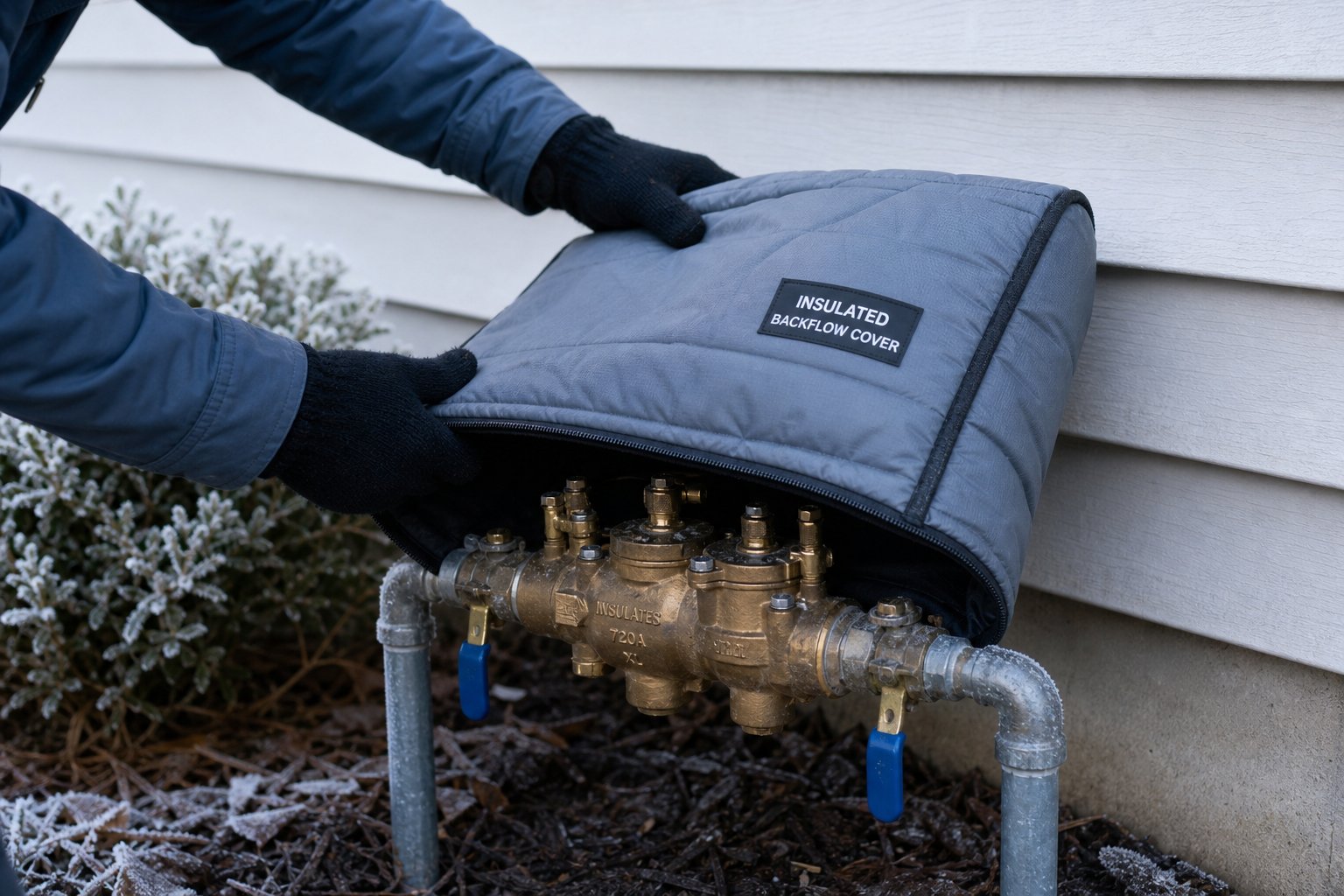
- Wrap the backflow preventer with an insulated cover or foam and outdoor tape. It is the most exposed, most expensive fitting on the system.
- Confirm the freeze sensor works so zones cannot run during a freeze and glaze the sidewalks. Grapevine and Southlake both see iced walks every winter from systems without one.
- Cut the controller to its winter schedule, roughly half of October run times, then plan to water only in extended dry spells.
- Disconnect and drain garden hoses. A connected hose traps water in the spigot and can crack the pipe inside the wall.
Water Deep, Then Mulch: The Soil Heat Battery
The most counterintuitive freeze protection is irrigation before the cold arrives. Moist soil soaks up solar heat by day and releases it around roots overnight, holding the root zone several degrees warmer than dry ground. Give lawns, beds, and especially fall-planted trees a deep drink 24 to 48 hours ahead of the front.
Then lock that advantage in with mulch. A 2-to-3-inch hardwood mulch layer over bed soil buffers both temperature and moisture swings. Fall-planted material across Tarrant County depends on it for a first winter. Beds mulched in early November also shrug off the freeze-thaw heaving that pops shallow roots out of bare clay.
Which plants actually need covering?
Fewer than most homeowners think. Established trees, shrubs, natives, and cool-season color like pansies ride out a first freeze untouched. The vulnerable list is short: tropicals like hibiscus and bougainvillea, potted citrus, tender herbs, and any summer annuals worth stretching another few weeks. Move pots into the garage, and cover in-ground tender plants with frost cloth anchored to the soil, never plastic touching foliage. A deeper guide to freeze protection methods follows in two weeks.
The Outdoor Living Sweep
Finish with a lap around the patio. Shut off and drain outdoor kitchen water lines, and close propane at the tank. Drain fountains or pull small pumps, and store cushions ahead of the first icy stretch. None of it takes long, and all of it beats discovering a burst sink line under an outdoor kitchen in February. Ellis Landscape Services runs pre-winter checkups across its Tarrant County service area each November. One scheduled visit covers backflow insulation, controller programming, and bed mulching.
Put the checklist on a trigger, not a date. The reliable signal is the first forecast low of 35 degrees or below, which usually gives two or three days of warning in Tarrant County. Hitting the list on that forecast beats guessing at the calendar every single year.
First Freeze FAQ
When is the average first freeze in Tarrant County?
Mid to late November for most of Tarrant County, though a strong front can bring one in early November. The checklist items worth doing, insulating the backflow preventer, disconnecting hoses, mulching, and deep watering, all pay off whether the freeze arrives early or late.
Should the landscape be watered before a freeze?
Yes, a day or two ahead. Moist soil absorbs heat all day and releases it overnight, keeping the root zone several degrees warmer than dry soil. Water deeply at the base of plants and across lawns, then shut the system off so nothing sprays during the freeze itself.
What part of an irrigation system freezes first?
The above-ground backflow preventer. It holds standing water, sits exposed to wind, and cracks in a single hard freeze. An insulated cover costs little; a replacement runs into the hundreds. Wrap it before the first freeze and leave the cover on all winter.
Which plants need protection at 32 degrees?
Tropicals and tender perennials: hibiscus, bougainvillea, citrus in pots, and summer annuals still hanging on. Established natives, pansies, and woody shrubs handle a standard first freeze without help. Save the frost cloth for the hard freezes and the borderline plants.