
A North Texas flower bed planted in late September or October with pansies, violas, and dianthus will hold color from November through April. The conditions: amended clay, plants 6 to 8 inches apart, and monthly feeding. Fall color is the highest-visibility, lowest-cost upgrade in landscaping. One weekend of bed work in Grapevine or Southlake pays off for seven months. Color runs straight through the gray weeks of January when the rest of the street looks asleep. The trick is that cool-season color runs on different rules than summer beds. The planting window is specific, and the soil prep is not optional in clay. The plant list that survives a Tarrant County ice storm is shorter than the garden center suggests. This guide covers the timing, the plants that earn their spot, and the bed preparation that decides everything.
Time the Planting to the Nights, Not the Calendar
Cool-season annuals go in when nights settle into the 60s, which in North Texas means late September through October. The Dallas Arboretum plants tens of thousands of pansies on that schedule for a reason: roots establish in warm soil, and the plants hit full bloom before the mid-to-late November freeze window. Planted in August heat, pansies stall. Planted in December cold, they survive but stay small until March.
October planting also lines up with pulling tired summer color. Lantana and vinca usually look spent by early October in Fort Worth anyway, so the rotation costs nothing extra.
The Cool-Season Plant List That Survives Ice
Every plant below rides out a typical North Texas winter, including single-digit snaps with brief protection:
- Pansies and violas: the backbone, blooming through hard freezes; violas carry smaller flowers but more of them.
- Panolas: the pansy-viola cross, with mid-size blooms and strong cold recovery.
- Dianthus: mounds of pink, red, and white that shrug off frost.
- Snapdragons: vertical spikes that pause in deep cold and rebloom hard in February.
- Ornamental kale and cabbage: foliage color that intensifies as temperatures drop.
Why do store-bought pansies fail in some yards?
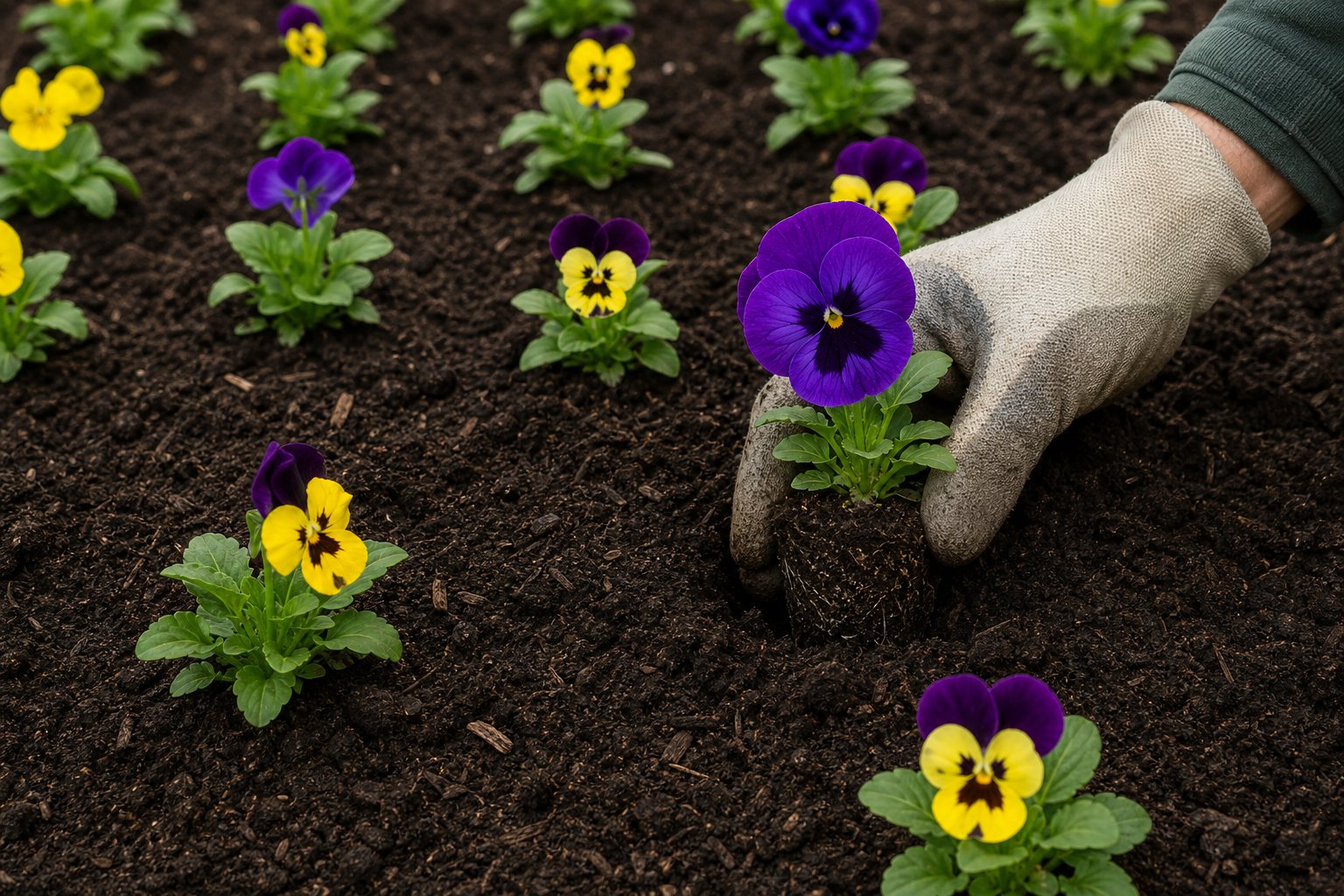
Almost always soil, not plant quality. Pansies need well-drained, organically enriched soil and at least six hours of direct sun. Straight Tarrant County clay drowns their shallow roots in winter rains, then the freeze finishes them. Beds amended with compost and expanded shale 6 to 8 inches deep drain fast enough that the same plants sail through. Spacing matters too: 6 to 8 inches apart gives air circulation that prevents the rot that wipes out crowded beds.
The planting afternoon runs in four steps:
- Pull spent summer color and rake the bed clean.
- Till 3 inches of compost and expanded shale into the top 6 to 8 inches.
- Set plants 6 to 8 inches apart with slow-release fertilizer in each hole.
- Water in deeply and mulch lightly between plants.
Placement drives the payoff. The beds worth planting first are the ones seen daily: the mailbox bed, the front walk, and the entry in view of the street. A 40-square-foot bed at the front door reads better than 200 square feet scattered along a back fence. Businesses in Fort Worth and Southlake use the same logic at monument signs and entrances. Winter color there signals an open, cared-for property through the slow months.
Feed Monthly: Cool-Season Color Runs Hungry
Pansies, violas, and panolas are heavy feeders, and winter beds fail slowly from hunger more often than suddenly from cold. Mix a slow-release fertilizer into the bed at planting, then supplement monthly with a nitrogen feeding through winter. Blooms shrink and foliage pales when feeding lapses, and recovery takes weeks. Deadhead pansies every couple of weeks to keep flowers coming, and cover beds with frost cloth only when temperatures dive toward the single digits. Ellis Landscape Services builds seasonal color rotation and monthly feeding into its maintenance routes across Tarrant County, from Argyle to North Richland Hills. Beds on the route peak in January instead of quitting in December.
Fall Color FAQ for North Texas Beds
When should pansies be planted in North Texas?
Late September through October, once nights drop into the 60s. Planted then, pansies root before the first freeze in mid to late November and bloom through winter into April. Planted too early, they stretch and sulk in heat. A useful signal is when tree leaves start turning.
What flowers survive winter in North Texas beds?
Pansies, violas, panolas, dianthus, snapdragons, ornamental kale, and cabbage all handle typical Tarrant County winters. Pansies are the most reliable, blooming through hard freezes that flatten everything else. Cyclamen adds shade color but needs frost-cloth cover in the coldest snaps.
How should a flower bed be prepared in clay soil?
Till 3 inches of compost and expanded shale into the top 6 to 8 inches so roots get drainage and air. Raise the bed center slightly so water sheds. Cool-season annuals are heavy feeders, so mix a slow-release fertilizer at planting and feed monthly with a nitrogen source.
Does Ellis Landscape Services install seasonal color?
Yes. Ellis Landscape Services designs, installs, and rotates seasonal flower beds for homes and businesses across Fort Worth, Keller, Southlake, and the rest of Tarrant County. Fall rotations install October through November, and spring rotations follow after the last freeze.