
Winterizing a North Texas water feature comes down to four decisions: stop feeding fish once water holds below 50 degrees, and net or clear the leaf load. Keep larger ponds running, drain small fountains, and never let ice seal a fish pond completely. North Texas winters are mild enough that most ponds in Fort Worth and Keller run beautifully all season. That is exactly why the occasional hard freeze catches owners unprepared. A koi pond is an ecosystem heading into dormancy on a schedule. A ceramic fountain is a masonry item that cracks the first night it freezes solid. The two need opposite treatment, and both need it done before Thanksgiving most years. Here is the whole checklist, feature by feature.
The Fish Schedule: 50 Degrees Changes Everything
Koi and goldfish run on water temperature, not the calendar. As the pond cools through the 50s, their metabolism slows, and below 50 degrees they effectively stop digesting. Food eaten then rots in the gut and can kill the fish weeks later. A pond thermometer settles the question: taper feeding through the 50s, switch to easily digested wheat-germ food, and stop entirely once readings hold below 50, typically late November in Tarrant County.
Debris matters for the same biological reason. Leaves rotting on the bottom burn oxygen and release gases all winter. Net the pond before the heavy oak drop in Colleyville and Grapevine yards, or clear the bottom with a pond net once the drop ends. A clean pond in December is the single best predictor of a clear, healthy pond in April.
Pumps and Waterfalls: Run the Big, Drain the Small
Equipment strategy splits by water volume. Work the list in this order before Thanksgiving:
- Ponds and larger waterfalls: keep running through normal winter weather. Moving water resists freezing and keeps oxygen up.
- Arctic events: shut waterfalls off when multi-day hard freezes hit, since ice dams on the falls can divert water out of the system. Run a small aerator near the surface instead.
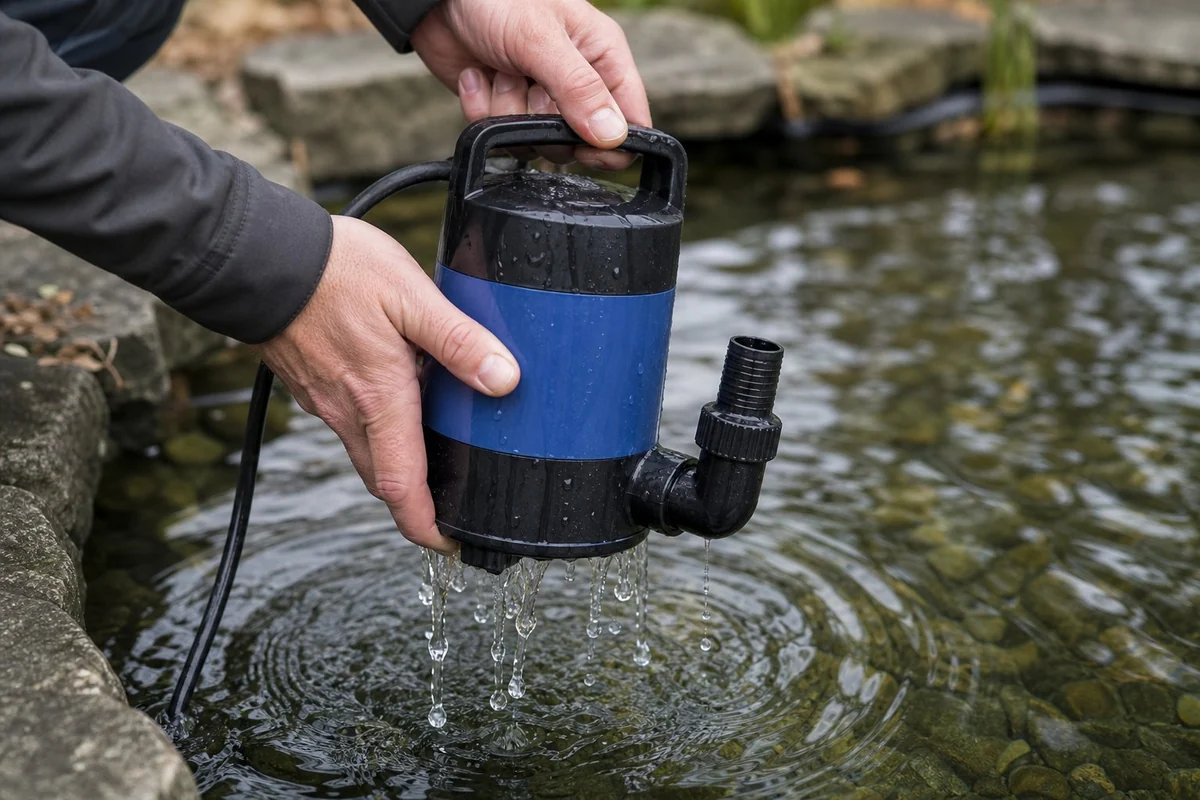
- Small fountains and bubblers: drain before the first hard freeze, store pumps indoors submerged in a bucket of water, and cover the empty basin.
- All features: top up water levels monthly, because winter evaporation quietly runs pumps dry.
What does a de-icer actually do?
A floating de-icer is a modest heater with one job: keeping a dinner-plate opening in the ice during the rare stretches when North Texas ponds cap over. That opening lets oxygen in and decomposition gases out, which is what keeps fish alive under the ice. It does not warm the pond, and it only needs to run during hard freezes. Paired with an aerator, it carries a fish pond through even a February 2021-style event.
Winter Is Also Water Feature Planning Season
A quiet season has its uses. Winter is when leaks, tired pumps, and redesign wishes get addressed without upsetting a living ecosystem, and when spring installation calendars are open. Ellis Landscape Services builds and services ponds, fountains, and waterfalls across its Tarrant County service area. Work runs from winterization visits to complete water feature designs scheduled for spring construction.
Disappearing fountains and bubbling urns split the difference. Their reservoirs sit below grade where freezing is rare, so most run all winter in North Texas. Shut them down only for multi-day hard freezes, and let the basin's stored ground warmth do the rest of the work.
Water Feature Winterization FAQ
When should koi stop being fed for winter?
When water temperature holds below 50 degrees, usually late November in Tarrant County. Koi metabolism shuts down in cold water, and food they cannot digest rots inside them. Resume feeding in spring once water holds above 50 again, starting with light wheat-germ-based food.
Should a pond waterfall run all winter in North Texas?
Most winters, yes. Moving water resists freezing, adds oxygen, and looks spectacular on frosty mornings. The exception is a multi-day arctic event, when ice damming on the falls can pump the pond dry. Shut the falls down for those stretches and run an aerator instead.
Do small fountains need to be drained for winter?
Yes. Small ceramic and concrete fountains hold little water, freeze solid fast, and crack. Drain them before the first hard freeze, pull the pump, and store it indoors in a bucket of water so seals stay wet. Cover the empty basin or flip it where practical.
Why can't a pond be allowed to freeze over completely?
A sealed ice lid traps the gases from decomposing debris and blocks oxygen exchange, which can kill fish in an otherwise healthy pond. Keep one opening in the ice with a floating de-icer, an aerator, or the waterfall itself. Never break ice with blows, which shock fish.