
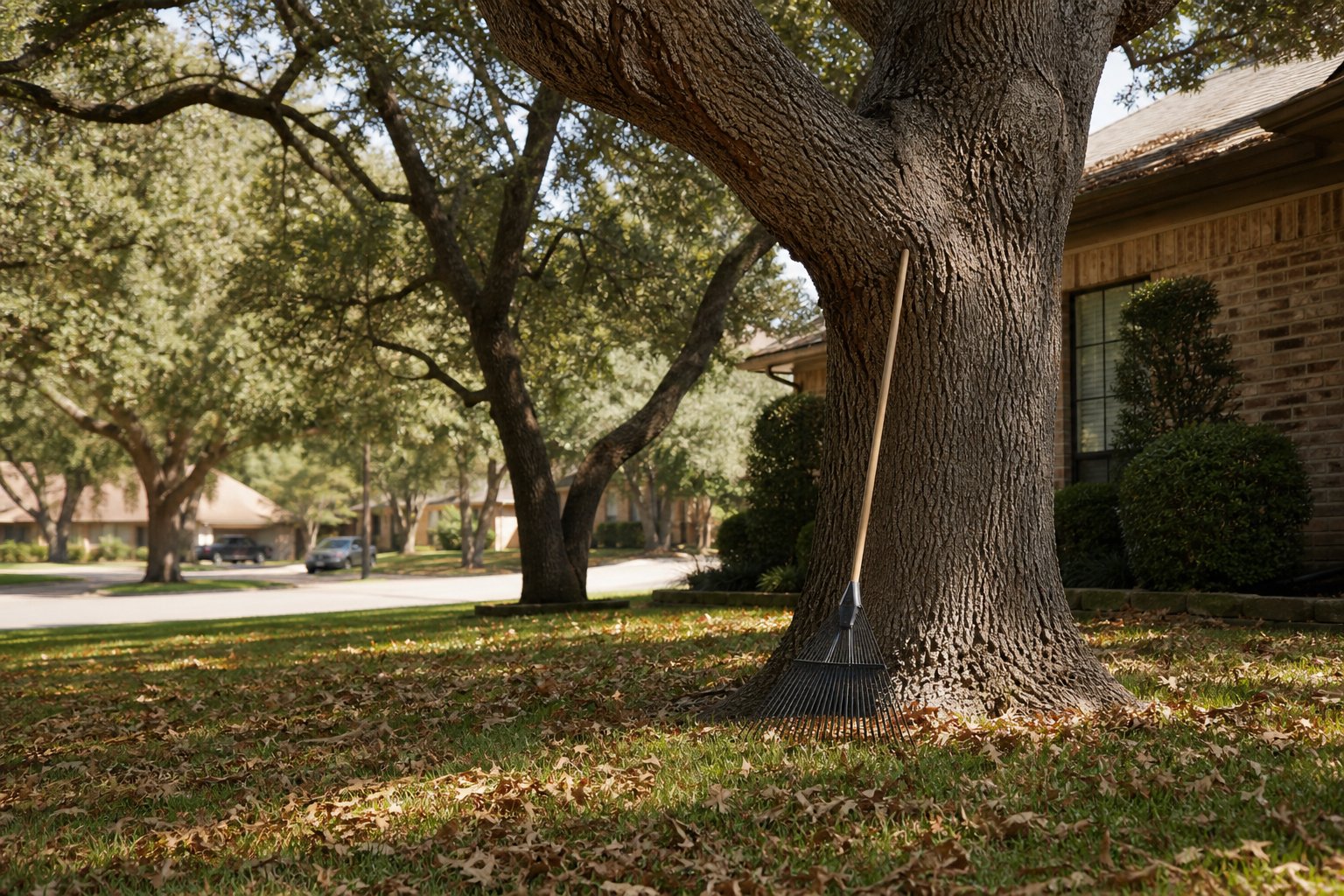
The rule for oak leaves on a North Texas lawn is simple: never let them mat. Mulch-mow weekly while leaves cover less than half the grass, and keep them out of drains and water paths. Remember that live oaks save their big drop for March. The mature oak canopies that make neighborhoods in North Richland Hills, Colleyville, and Fort Worth worth living in also bury them every fall. One large red oak sheds hundreds of thousands of leaves. The difference between free fertilizer and a dead lawn is entirely about depth and timing. Leaves handled weekly feed the soil. Leaves ignored until December smother turf, breed fungus, and clog the drainage that clay soil already struggles with. Here is the system that keeps oak country lawns healthy through leaf season.
Matted Leaves Are a Turf Killer, Not a Blanket
Grass in October is still working. Warm-season lawns are storing carbohydrates for spring, and that requires sunlight reaching blades. A leaf layer thick enough to hide the lawn cuts that light to zero and holds moisture against the grass. That creates the exact humid mat where brown patch and other fungi thrive. Add a November rain and the layer glues itself down.
The threshold to act is visual: when you can see more leaves than lawn, it is time to mow or clear. In heavy drop weeks under a big canopy in Keller, that can mean twice a week. The lawn repays the effort in April.
Mulch Mowing: Let the Mower Do the Raking
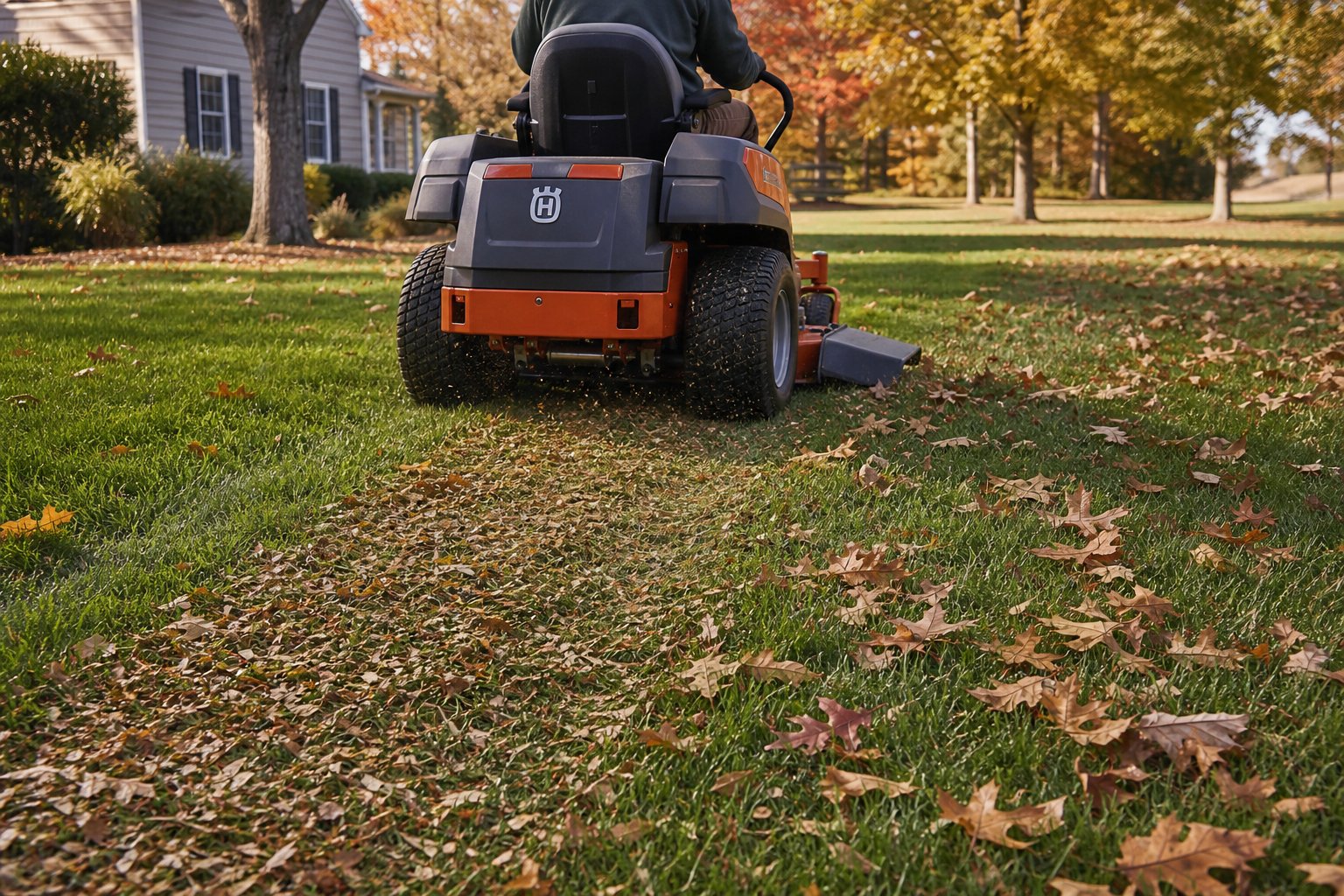
University turf programs have tested leaf mulching for decades, and the verdict is consistent: chopping leaves into the lawn at reasonable rates helps soil and does not harm turf. The method is easy:
- Set the mower to its normal height and fit the mulching plug.
- Mow when leaves are dry, crossing twice at right angles if the layer is thick.
- Stop when chopped pieces disappear into the canopy within a day. Visible piles mean too much material.
- Bag the overflow weeks and compost the bags, or pile leaves as free mulch under trees and in beds.
What about leaves in beds, gutters, and drains?
Beds tolerate leaves better than lawns, and a 2-inch leaf layer in a shrub bed is honest winter mulch. The places leaves cause real trouble are hard surfaces and water paths. Leaves in gutters send roof water sheeting against foundations, which is a genuine problem in expansive clay. Leaves over area drains and French drain grates in Grapevine yards turn a working drainage system into a pond. Clear the water paths every couple of weeks through leaf season, and again after the first hard winter wind.
Build the Two-Season Oak Calendar
Oak country in Tarrant County runs on two leaf seasons. Red oaks, cedar elms, and most shade trees drop from late October through December. Live oaks hold on, then dump nearly everything across two to three weeks in March, right as spring lawns are waking up. Plan a heavy cleanup at the end of each window: December for fall drop, late March for live oak drop. Ellis Landscape Services schedules exactly those cleanup rounds across its Tarrant County routes. Leaf removal pairs with bed cleaning, mulch refresh, and gutter-line checks in one visit.
One more payoff hides in the compost pile. Oak leaves shredded and stacked through winter break down into leaf mold by summer. That free organic matter is exactly what Tarrant County clay beds need every year. A simple wire ring behind the fence turns December's chore into August's soil amendment.
Oak Leaf Management FAQ
Do fallen leaves really damage a North Texas lawn?
A thin scattering does no harm, but a matted layer does real damage. Leaves left thick enough to hide the grass block sunlight, trap moisture against blades, and set up fungal disease. Two to three smothered weeks in fall can thin turf that takes all spring to recover.
Is mulch mowing better than raking and bagging?
For most lawns, yes. When leaves cover less than about half the lawn, a mulching mower chops them into dime-size pieces that filter down and feed the soil. Mulch mowing weekly during leaf drop returns nutrients, skips bag fees, and takes a fraction of raking time.
Why do live oaks drop leaves in spring too?
Live oaks are the exception to fall cleanup. They hold most foliage through winter, then shed heavily in March as new leaves push out. Yards under live oaks in Fort Worth and Colleyville need two leaf seasons on the calendar. Fall covers the red oaks, and early spring covers the live oaks.
Does Ellis Landscape Services handle fall leaf cleanup?
Yes. Ellis Landscape Services runs fall and spring property cleanups across Tarrant County, including leaf removal, bed cleaning, gutter-line beds, and mulch refresh. Cleanup routes through Keller, North Richland Hills, and Southlake fill quickly once leaf drop starts in late October.