
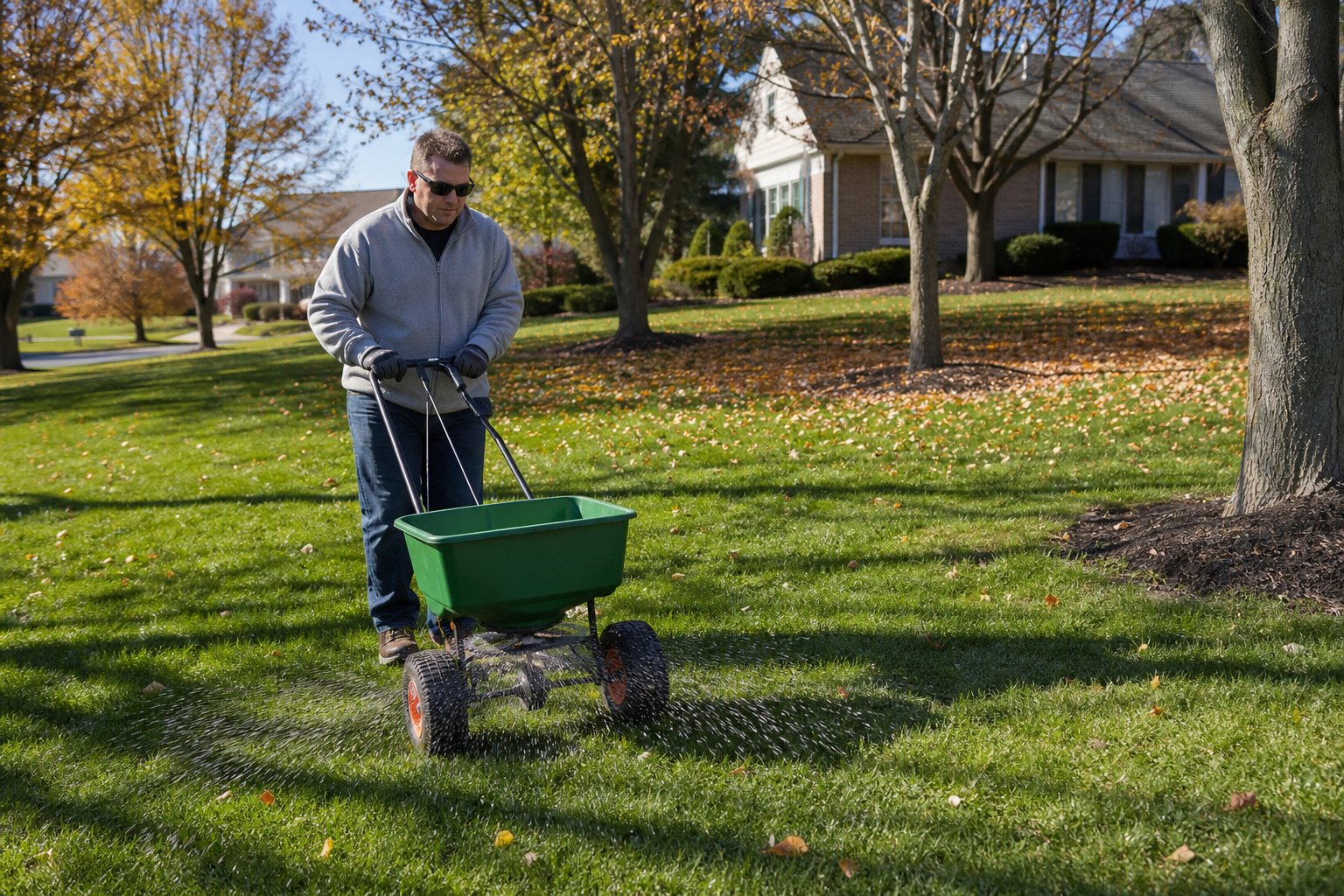
North Texas lawns get one high-impact month per year, and it is September: a fall fertilization while roots are still growing, plus a pre-emergent barrier down before soil temperatures fall through 70 degrees. Together they prevent a weak spring lawn and a winter weed invasion. The two applications share a window and solve the two most common lawn complaints in Tarrant County. Lawns that green up pale and thin in April skipped their fall feeding. Lawns carpeted in low green weeds by February skipped their fall pre-emergent. Both misses happen for the same reason: by late September the lawn still looks fine, so nothing seems urgent. The work is invisible until spring, when it is too late to fix. Here is the timing, the products, and the soil-temperature trick that takes the guesswork out.
Fall Fertilization Feeds Roots, Not Blades
Warm-season grasses flip priorities in fall. Blade growth slows as days shorten, but roots keep working hard through September and October while soil holds above 70 degrees. Nutrients applied in this window go into root mass and stored carbohydrates, which is exactly what Bermuda and Zoysia draw on for spring green-up.
Timing rules from Texas A&M AgriLife are specific: feed only after highs drop out of the upper 90s, and never feed drought-stressed turf. Get it done by early October so growth hardens off before the first freeze. A balanced fertilizer with controlled-release nitrogen suits most Fort Worth and Keller lawns; a soil test every few years beats guessing at phosphorus and potassium.
Pre-Emergent: The 70-Degree Soil Rule
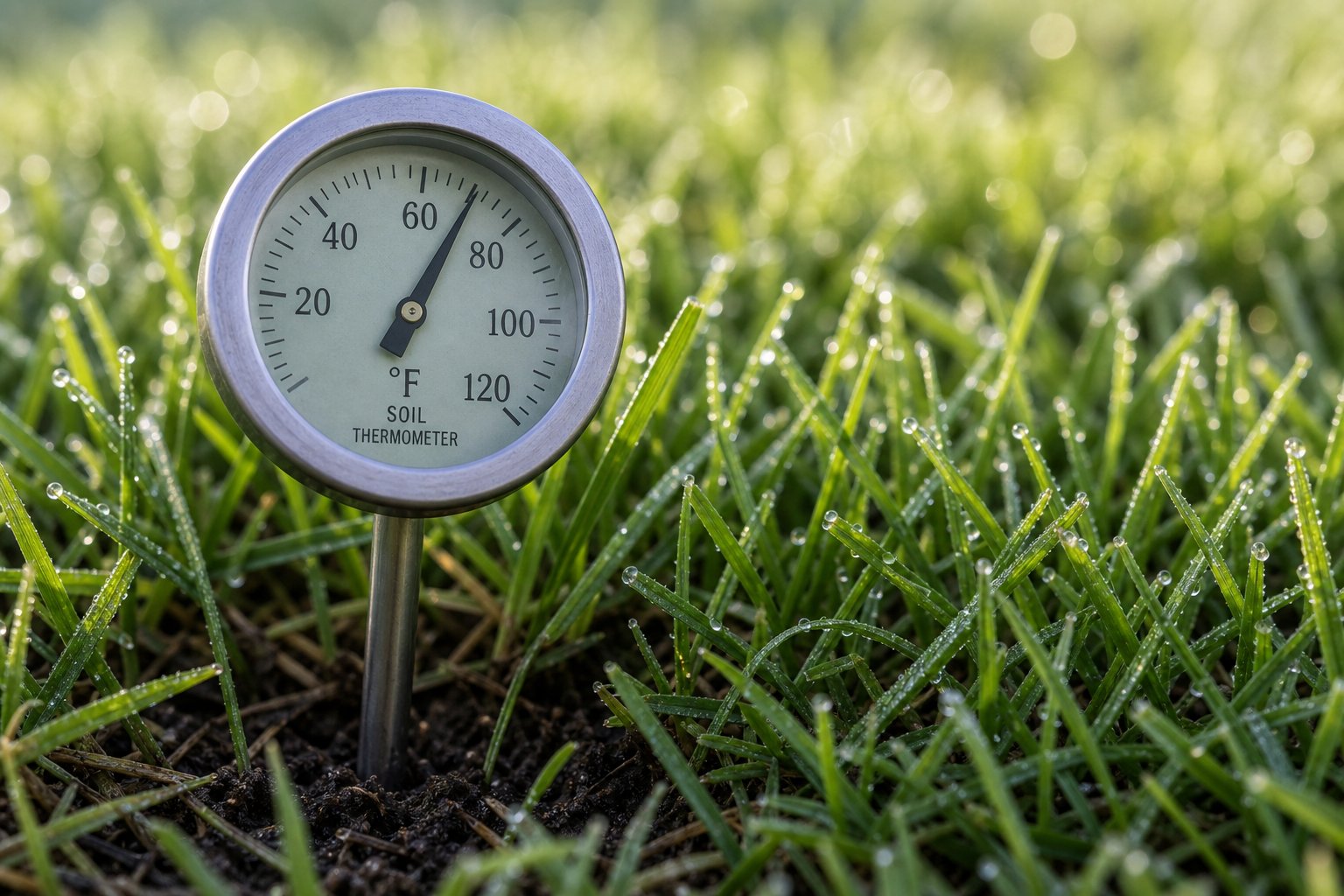
Winter weeds are a fall event. Annual bluegrass, henbit, and chickweed germinate when soil temperature drops through roughly 70 degrees at 2 to 3 inches deep. In Tarrant County that crossing usually lands between mid-September and early October. The pre-emergent barrier has to be down and watered in before that happens.
Skip the calendar and check the soil directly:
- Push a soil thermometer 2 to 3 inches into a sunny lawn area in mid-September.
- Read it midmorning for three consecutive days.
- When readings trend from the mid-70s toward 70, apply the pre-emergent.
- Water it in with about a half inch of irrigation on a legal watering day.
What happens if the pre-emergent goes down late?
A barrier applied after germination does nothing. The evidence shows up in February as a carpet of Poa annua seed heads across lawns in Grapevine and Flower Mound. The recovery options shrink to selective post-emergent treatments, which are slower, pricier, and harder on stressed turf. A late application is still worth making, since germination staggers across weeks, but every warm day after the 70-degree crossing lets more weeds through. Early beats perfect.
Two cautions keep the fall program safe. First, skip pre-emergent on any area being sodded or seeded this fall, since the barrier blocks new grass roots exactly the way it blocks weeds. Keep it out of flower beds slated for October pansies, too. Second, sweep granules off driveways and walks back onto the lawn before watering. That protects the water supply, and product on concrete is money doing nothing.
One September Visit Covers Both Jobs
The fertilization window and the pre-emergent window overlap almost exactly, so a single properly timed September visit sets up the lawn for six months. Combination products or back-to-back applications both work when rates match the grass type and the square footage is measured instead of estimated. Ellis Landscape Services has maintained Tarrant County lawns since 2011. Fall feeding and pre-emergent run as one scheduled stop on its maintenance programs from Argyle to North Richland Hills. The crew handles the soil-temperature timing.
Fall Fertilization and Pre-Emergent FAQ
When should fall fertilizer go down in North Texas?
September, once daytime highs fall out of the upper 90s and the lawn is no longer drought-stressed. Roots keep growing through September and October even as blade growth slows, and a fall feeding builds the root reserves that drive spring green-up. Late October is too late.
When is fall pre-emergent applied in North Texas?
Between mid-September and early October, before soil temperature drops through 70 degrees at 2 to 3 inches deep. That threshold is when winter weeds germinate. A soil thermometer beats any calendar date, since the window shifts a week or two with each year's weather.
What weeds does fall pre-emergent prevent?
The fall barrier targets winter annuals: annual bluegrass (Poa annua), henbit, and chickweed. These germinate in fall, grow through winter, and take over lawns by February. Once they are visible, pre-emergent does nothing, which is why the fall timing matters more than the spring one.
Can fertilizer and pre-emergent go down together?
Yes. The September window works for both, and combination products handle the two jobs in one pass. Ellis Landscape Services applies both across Tarrant County lawns as part of maintenance programs, with rates matched to each lawn's grass type and soil.