
A French drain is the standard fix for standing water in DFW clay: a fabric-lined, gravel-filled trench with perforated pipe, sloped at least 1 inch per 8 to 10 feet. It carries water from the wet spot to a safe discharge point. Fall is the season to build one. October soil is dry enough to trench cleanly. The drain is finished before the winter and spring rains that turn problem yards in Grapevine and North Richland Hills into ponds. The stakes are bigger than soggy grass. Water that stands against a slab moves foundations, and foundation repair costs run twenty times a drainage project. Every fall, the smart sequence is the same: watch where water sat last storm season, fix the water path in October, and let the drain prove itself by March.
Why Clay Yards Pond, and Why Grading Comes First
Tarrant County sits on expansive clay that absorbs water slowly and holds it stubbornly. Builders rarely helped: plenty of Mid-Cities lots were graded flat or even toward the house, and fence lines interrupt what little flow exists. The result shows up as water standing 24 hours after rain, mushy side yards, and beds that drown plants.
Not every wet yard needs a pipe. Surface regrading, extended downspouts, and a dry creek swale solve some problems for less. The French drain earns its place where water collects with nowhere to go: side yards between houses, bed lines along foundations, and low lawn pockets. A drainage assessment sorts surface problems from subsurface ones before any digging starts.
The Anatomy of a Drain That Lasts 20 Years
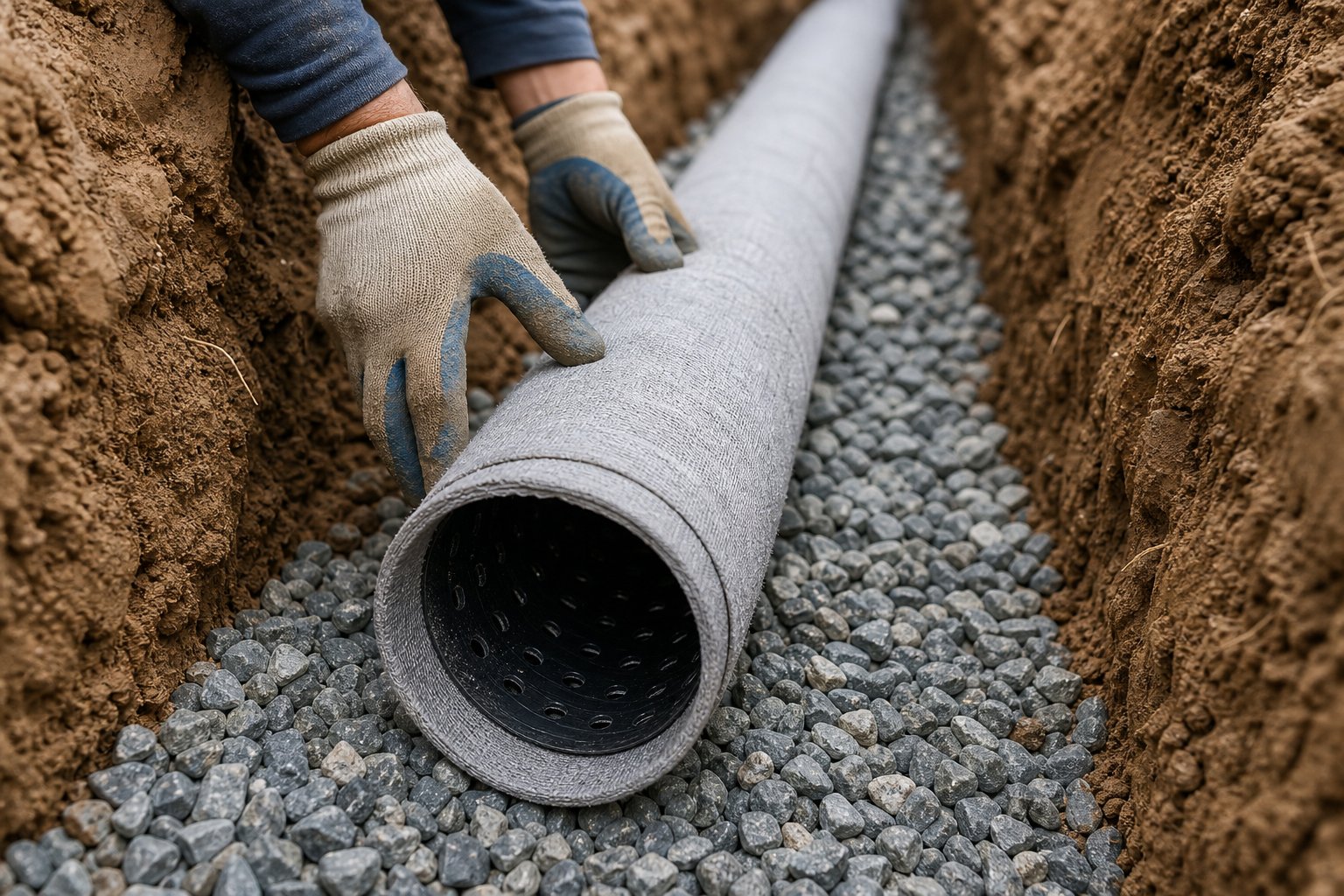
French drains fail from shortcuts, not from age. The lasting version is specific:
- Trench: 6 to 12 inches wide, 18 to 24 inches deep for most lawn applications, cut on a continuous 1 percent minimum grade.
- Fabric: non-woven geotextile lining the trench, keeping clay fines out of the gravel.
- Pipe: rigid perforated PVC at the bottom, holes down, which resists crushing and roots better than corrugated pipe.
- Gravel: washed 1-inch stone surrounding the pipe, wrapped closed with the fabric.
- Finish: soil and sod over the top, or decorative rock where the drain doubles as a dry creek.
- Discharge: daylight, street gutter, or storm connection, established before the first shovel of digging.
Can a French drain tie into gutters and sprinkler zones?
Downspouts should get their own solid pipe rather than dumping into the French drain. Roof water volume overwhelms a perforated line and carries shingle grit that clogs gravel. The two systems can share a trench and a discharge point. Irrigation matters too: a zone overspraying a wet area keeps a drain working overtime, so head adjustments belong in the same project. This is why drainage and irrigation design work best from one licensed hand.
Fall Installation, Spring Proof
An October drain project in Keller or Colleyville typically runs one to three days, lawn repair included. Trenching through dry fall soil is cleaner and cheaper than fighting spring mud, and sod knits over the scar before winter. Then the system faces its first real test when the heavy rains arrive, with months of margin to adjust before summer. Ellis Landscape Services builds French drains, channel drains, and grading fixes across Tarrant County, engineered alongside irrigation by a TCEQ Licensed Irrigator. Water goes where it should in every season.
Maintenance is minimal but real. Flush the line from its cleanout once a year, and keep the discharge point clear of leaves and mulch. Walk the drain path after big storms to confirm water is moving. A drain built to spec and flushed annually outlives most roofs in North Texas.
French Drain FAQ for DFW Yards
How does a French drain work in clay soil?
A French drain is a gravel-filled trench with a perforated pipe at the bottom, wrapped in filter fabric. Water standing in clay soil finds the gravel path, enters the pipe, and flows by gravity to a discharge point. It moves water that Tarrant County clay would otherwise hold for days.
How much slope does a French drain need?
The working minimum is a 1 percent grade, which is about 1 inch of fall for every 8 to 10 feet of pipe. Less slope lets sediment settle and clog the line. A laser or string level during installation is the difference between a 20-year drain and a 2-year one.
Where should a French drain discharge?
To daylight at a lower point on the property, a street gutter, or an approved storm connection. Keep it away from foundations and never aim it into a neighbor's yard. Discharge planning is where most DIY drains fail, and it is the first thing a professional designs, not the last.
Who installs French drains in Tarrant County?
Ellis Landscape Services designs and installs French drains, channel drains, and grading corrections across Fort Worth, Keller, Grapevine, and its full Tarrant County service area. Founder Keir Hamlin is a TCEQ Licensed Irrigator (#20021), so drainage and irrigation get engineered together.