
North Texas irrigation systems need three fall adjustments: cut run times about 30 percent in October and half by November, and verify the rain and freeze sensor works. Then confirm the controller still matches the city's two-day watering schedule. Summer settings left running through fall waste thousands of gallons and set lawns up for fungus. The math is simple. An August lawn in Fort Worth loses moisture fast enough to justify an inch of irrigation weekly. By late October, cooler air, shorter days, and fall rain cut that demand roughly in half. By December, established lawns need almost nothing beyond rainfall. Every week the controller ignores that curve, water and money run down the gutter. These are the adjustments a TCEQ Licensed Irrigator makes on fall service visits across Tarrant County, in the order they matter.
Step the Run Times Down Monthly
Evapotranspiration, the combined water loss from soil and plants, drives all irrigation math. It falls off a cliff between September and November in North Texas. Summer zone times are built for peak demand. Fall needs a declining schedule:
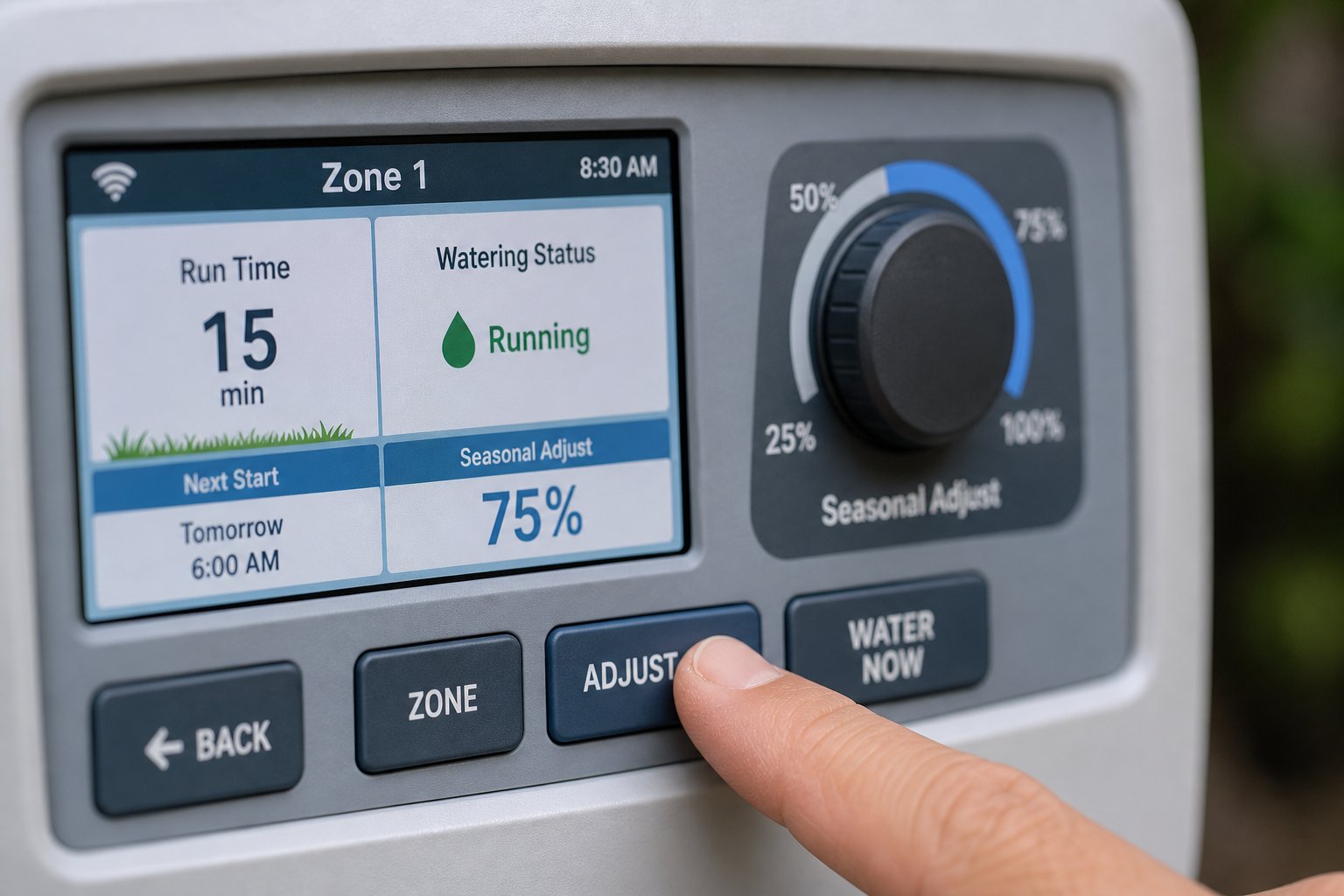
- Late September: drop seasonal adjust to about 80 percent of summer.
- Mid-October: drop to 60 or 70 percent, and watch for runoff as clay soils stay wetter longer.
- November: drop to 50 percent or less, and skip cycles entirely in rainy weeks.
- After the first freeze: water only during extended dry spells, about once every two to three weeks.
Smart controllers with weather-based adjustment handle this curve automatically, and most Tarrant County cities have offered rebates for them in recent years.
Test the Rain and Freeze Sensor Before You Need It
Texas requires rain and freeze sensors on new automatic systems for a reason: nothing wastes water like sprinklers running in a storm, and nothing ices a Grapevine sidewalk like heads spraying through a freeze. Sensors fail quietly, usually from a dead battery or a degraded sensor disc.
Test takes two minutes. Run a zone, then press and hold the sensor's test button or wet the disc. The zone should shut off within a minute. If it keeps running, the sensor needs a battery or replacement before November, when the first freeze typically reaches Tarrant County.
Should sprinkler systems be shut down completely for winter?
Usually not in North Texas. Lawns and evergreens still need occasional deep watering through dry winters, so most systems stay active with minimal schedules. Full winterization makes sense for systems with exposed piping, poor drainage at the backflow preventer, or owners traveling for the season. Either way, insulate the backflow preventer before the first hard freeze, since it is the most expensive component to replace and the first to burst.
Drip zones deserve one specific fall check. Emitters clog over a summer of hard water, and a clogged line shows up as dead shrubs weeks later, long after the cause is invisible. Open the end cap, flush the line for a minute, and watch each emitter drip while the zone runs. Ten minutes per zone in October saves plant replacements in March, especially in foundation beds where drip does all the work.
Fall Is Also Repair Season
September and October are the smart window for fixing everything summer exposed: dry arcs from tilted heads in Keller lawns, geysers from cracked risers, and zones that lost pressure. Add drainage that kept beds soggy in North Richland Hills. Repairs made now pay off twice, once in fall water savings and again when spring startup works on the first try. Ellis Landscape Services runs fall irrigation checkups across its Tarrant County service area, with licensed repairs, sensor installs, and controller programming in a single visit.
Fall Irrigation FAQ
How much should watering be reduced in a North Texas fall?
Cut run times by roughly 30 percent in October and 50 percent by November compared to summer settings. Cooler air and shorter days slash evaporation, and fall rains cover part of the demand. A lawn that needed an inch per week in August needs half that by Halloween.
Do watering restrictions still apply in fall?
Yes. Most Tarrant County cities keep twice-weekly schedules and the 10 a.m. to 6 p.m. spray ban year-round, though enforcement peaks in summer. Check your city's schedule before reprogramming. Hand watering and drip irrigation typically stay exempt for new plantings.
What is a seasonal adjust setting on a controller?
Seasonal adjust scales every zone's run time by one percentage, so a 60 percent setting turns a 10-minute zone into 6 minutes. Dropping the percentage monthly through fall keeps the whole system in step with the weather without rebuilding each zone schedule by hand.
Who should service an irrigation system in Texas?
Texas law requires licensed irrigators for system installation and major repair. Keir Hamlin, founder of Ellis Landscape Services, holds TCEQ Irrigator License #20021 and services systems across Tarrant County. Work covers controller programming, sensor installs, head repairs, and drainage fixes.