
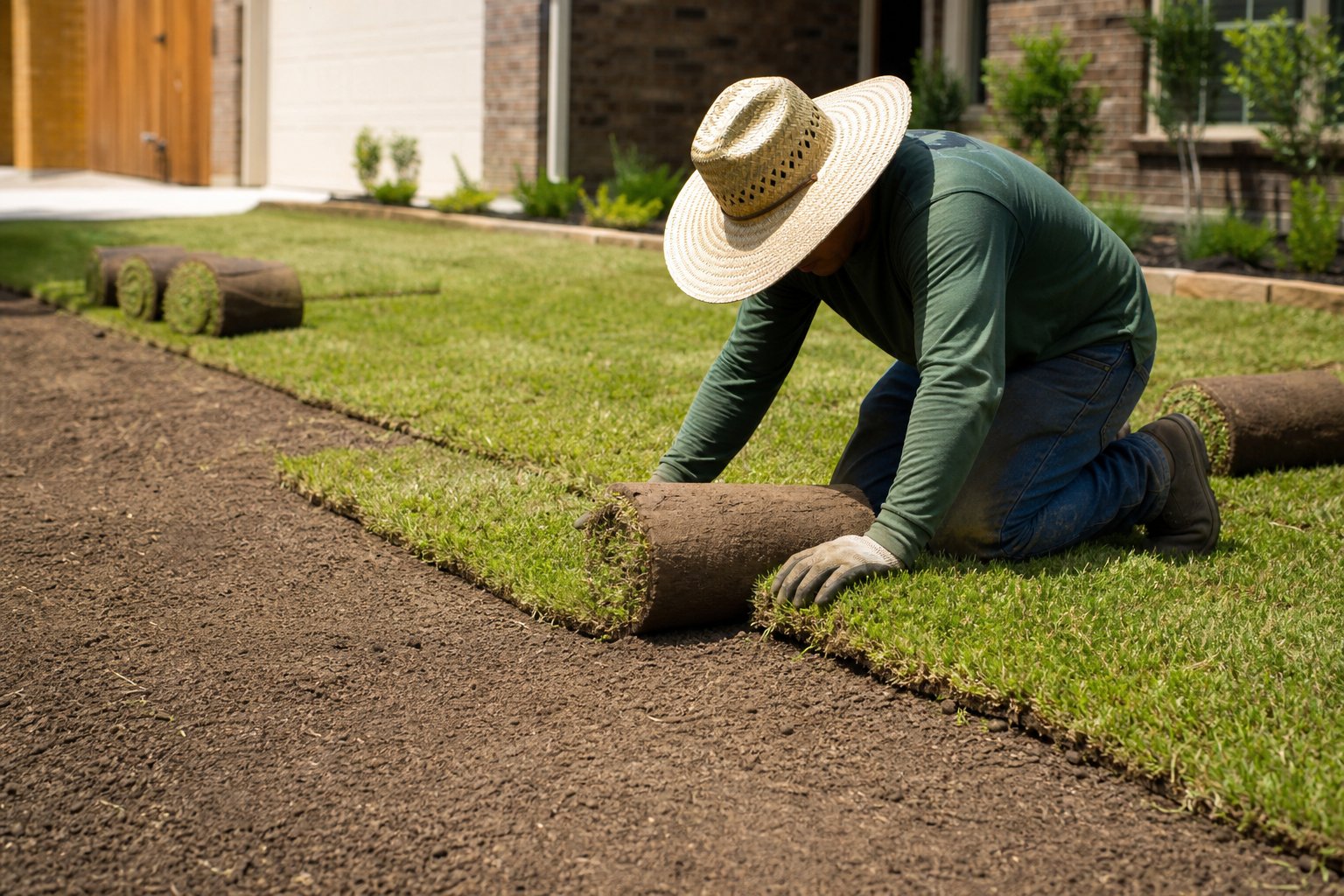
For a heat-damaged lawn in DFW, sod is usually the right repair and overseeding is usually the wrong one. Most North Texas lawns are Bermuda, and Bermuda repairs itself by runners rather than by seed. By late August, plenty of lawns across Fort Worth, Keller, and Flower Mound show the damage. Crispy patches, thin traffic paths, and edges gave up in July. The instinct is to throw seed at the damage. Hold on. The repair that works depends on the grass type, the size of the damage, and one question almost everyone skips: what actually killed those patches? Heat alone rarely kills established Bermuda. Compacted soil, a blocked sprinkler head, tree shade, or grubs did the real damage, and heat just finished the job. Diagnose first, then choose the repair. Here is how the two options compare, and the order of operations that keeps the fix from failing next summer.
Diagnose the Cause Before Buying Anything
A repair over an unsolved problem fails on schedule. Four causes explain most dead patches in Tarrant County lawns, and each takes about ten minutes to check:
- Irrigation coverage: run each zone and watch. A blocked or tilted head leaves a dry arc that matches the dead spot exactly.
- Compaction: push a screwdriver into moist soil. If it will not slide 4 to 6 inches, roots cannot breathe, and traffic paths prove it.
- Shade: Bermuda needs 6 or more hours of direct sun. Under a maturing live oak in Colleyville, no repair holds without a grass change or a bed conversion.
- Grubs: tug the dead turf. If it lifts like carpet with no roots, white grubs are feeding underneath and need treatment first.
Sod vs. Overseeding: The Honest Comparison
Once the cause is fixed, choose the repair by speed, cost, and grass type. The comparison is not close for most DFW situations:
| Sod | Overseeding | |
|---|---|---|
| Result speed | Instant coverage, rooted in 2 to 3 weeks | 4 to 8 weeks to germinate and fill, if it takes |
| Up-front cost | Higher, several times seed cost | Low per square foot |
| Works on hybrid Bermuda | Yes, matching variety available | Poorly, seed will not match color or texture |
| Water demand during establishment | Moderate, tapers after 3 weeks | High, light daily watering that fights city restrictions |
| Best season in North Texas | September to mid-October, or spring | Warm-season seed wants June; fall rye is temporary color only |
| Failure risk on clay | Low with soil prep | High, seed washes and crusts on unamended clay |
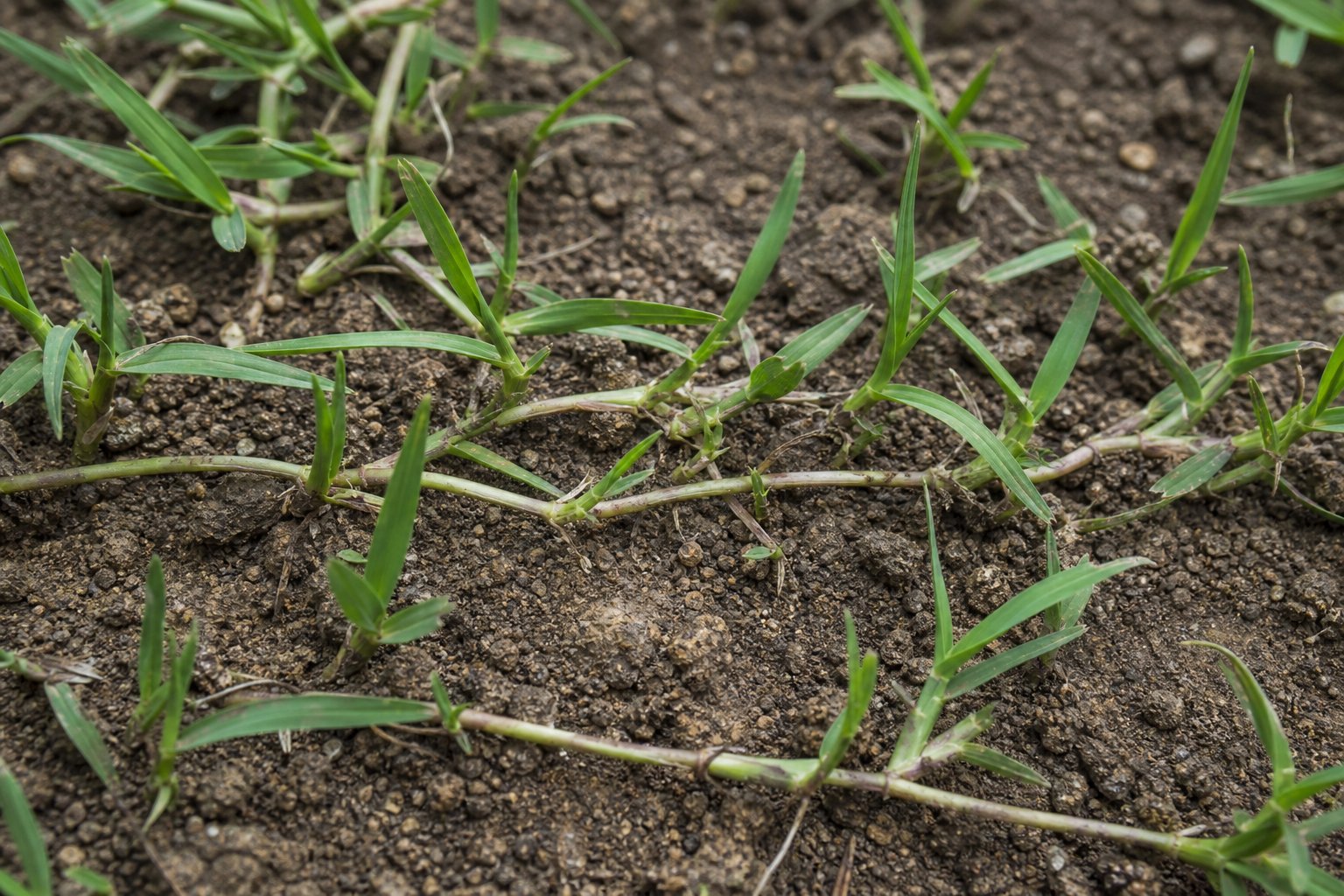
What about just letting Bermuda fill back in?
Patience is a legitimate third option. Healthy Bermuda spreads laterally up to a half inch per day in good conditions. A thin area smaller than a dinner plate usually closes itself by mid-October once the cause is fixed. Mark the patch, water on schedule, and check monthly. Choose sod when the bare area is bigger than a couple of square feet or erosion is starting. It is also the right call when the lawn needs to look finished before the holidays.
The Repair Sequence That Sticks
Whichever route wins, the order of work matters more than the product. Fix irrigation and compaction first, then amend the top few inches of clay in the repair zone. Install sod with edges tight and roll it for soil contact. Water new sod daily for the first week under most city new-landscape exemptions, then step down to the standard twice-weekly schedule. Skip fertilizer until roots knit, then give the whole lawn its September feeding so the repair blends in. Ellis Landscape Services has served Tarrant County since 2011. Sod repairs fold into maintenance and irrigation work, so the fix and the cause get handled in one visit.
Lawn Repair FAQ for North Texas
Will a heat-damaged Bermuda lawn recover on its own?
Often, yes. Bermuda spreads by above-ground runners and underground rhizomes, so thin areas usually fill back in by October once nights cool, if watering stayed consistent. Patches still bare after four to six weeks of recovery weather point to compaction, shade, or irrigation gaps.
Why is overseeding Bermuda grass usually a mistake?
Common Bermuda seed rarely matches the hybrid varieties on DFW lawns, so overseeded patches grow in a different color and texture. Seed also needs weeks of daily watering inside city restrictions. Fixing the cause and letting runners spread, or patching with matching sod, works better.
How much does sod cost compared to seeding in North Texas?
Sod costs several times more than seed up front, but it delivers an instant, mature surface and establishes in two to three weeks. Seed is cheaper per square foot and slower, with higher failure risk on clay soil. Most Tarrant County repairs pencil out in favor of sod.
When is the best time to lay sod in North Texas?
Early fall, September through mid-October, is ideal. Soil is warm enough for roots to knit before dormancy, and cooler air cuts water demand. Spring works as a second window. Ellis Landscape Services installs sod across Tarrant County in both seasons as part of full lawn repairs.