
Planting a tree or shrub in North Texas clay comes down to four rules: dig the hole wide but never deep, keep the root flare above grade, backfill with native soil, and water by trickle instead of spray. Clay is the defining fact of landscaping from Fort Worth to Flower Mound. It holds water for days after a storm, then bakes into brick by July. Plants that thrive here are planted for those two extremes at the same time. September and October are the ideal window. Warm soil drives root growth for 8 to 10 weeks before the first freeze in mid to late November. The technique matters as much as the timing. A 200-dollar tree planted wrong dies in its second summer, and the failure was decided the day the hole was dug. Here is the planting method that works in Tarrant County clay, step by step.
Dig Wide, Not Deep: The Bathtub Problem
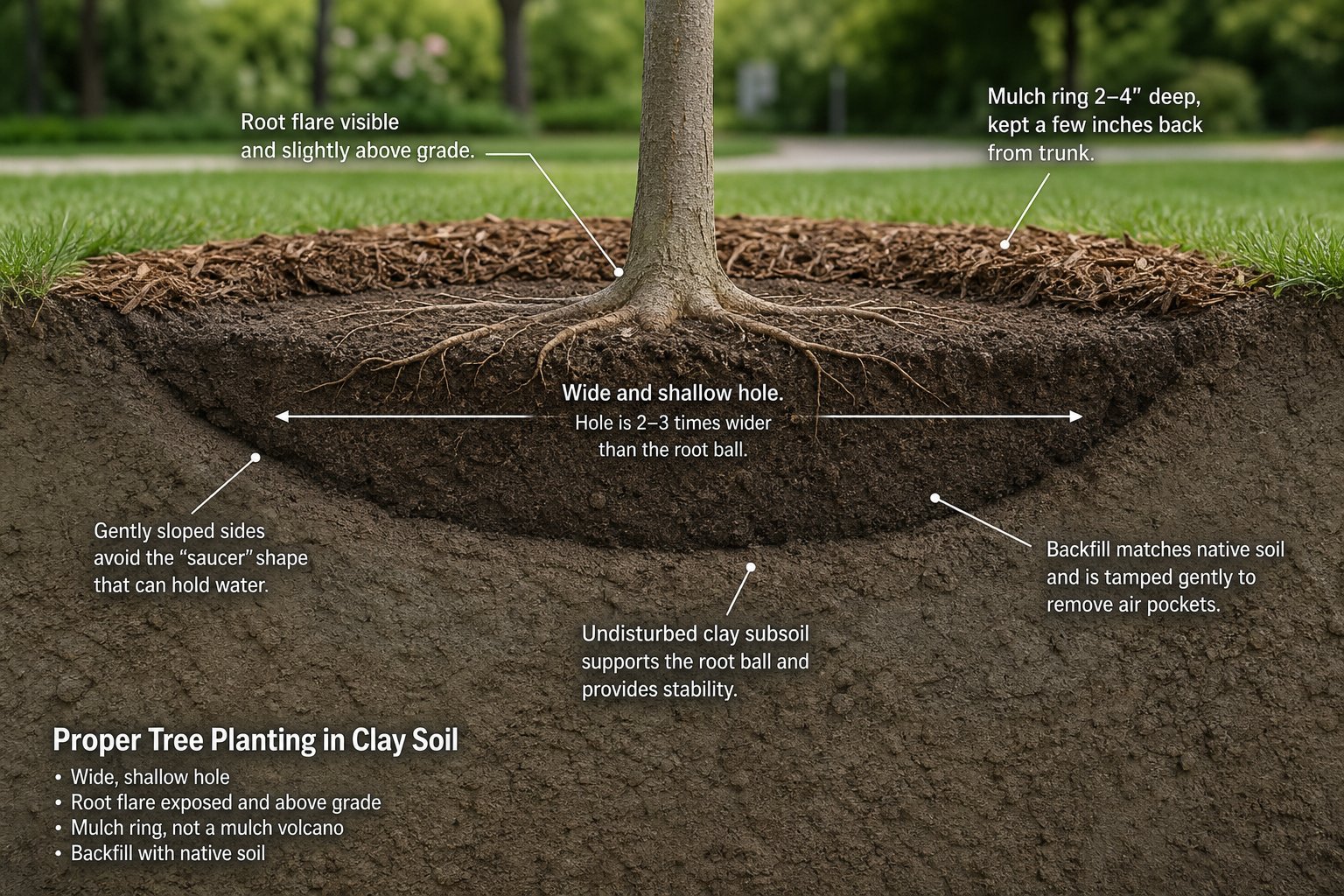
The most common planting mistake in clay is a deep, narrow hole. Water moves through clay slowly, so a deep hole filled with loose soil collects runoff and holds it against the roots for days. Growers call it the bathtub effect, and it drowns more North Texas trees than drought does.
The fix is geometry. Dig two to three times the width of the root ball and exactly its height, so the ball rests on undisturbed soil and cannot settle. The root flare, where the trunk widens into the roots, should sit an inch or two above the surrounding grade in clay. Planting slightly high sheds water away from the trunk. Keller and Grapevine yards with known drainage trouble sometimes need a berm or a French drain before any tree goes in.
Backfill Rules: Amend Beds, Not Tree Holes
Soil amendment has a place, and it is not the tree hole. Backfilling one hole with compost creates a soft pocket that roots circle inside instead of pushing into native clay. Break up the excavated clay, backfill with it, and water it in to settle air pockets. Save the amendment budget for beds.
Shrub and perennial beds are different because the whole root zone gets improved at once. For a new bed in North Richland Hills or Colleyville, till in 3 inches of compost plus expanded shale. Work it into the top 6 to 8 inches across the entire bed. Expanded shale keeps clay opened up mechanically for years, which compost alone cannot do.
How much should you water a fall-planted tree?
Deeply at planting, then on a declining schedule as roots take over. Run a hose at a slow trickle on the root ball for 20 to 30 minutes. Repeat two to three times per week for the first month. Drop to weekly through November and December, and keep watering monthly through winter dry spells, because North Texas winters kill dry-rooted evergreens. Most Tarrant County watering schedules exempt hand watering and drip irrigation, so new plantings stay legal even under restrictions.
Mulch, Staking, and the First-Year Checklist
Finish the planting the same day it goes in the ground:
- Ring the planting with 2 to 3 inches of hardwood mulch, pulled back a hand-width from the trunk.
- Stake only if the site is windy or the ball is loose, and remove stakes within one year.
- Skip fertilizer at planting; roots want soil, not nitrogen. Feed lightly the following spring.
- Check the root flare each month and clear any soil or mulch that creeps over it.
- Prune nothing the first year except dead or broken branches.
Ellis Landscape Services has installed trees and full landscapes in Tarrant County clay since 2011. Species selection, drainage correction, and irrigation are handled in the same project. Fall installation slots run September through November and fill early.
Clay-Soil Planting FAQ
How wide should a planting hole be in clay soil?
Dig the hole two to three times wider than the root ball but no deeper. Wide and shallow beats deep and narrow in clay, because roots spread sideways through loosened soil. A hole dug too deep lets the tree settle, and settled trees drown in clay.
Should you amend clay soil when planting a tree?
Amend beds, not individual tree holes. A tree hole backfilled with rich compost becomes a bathtub that roots never leave. Backfill tree holes with the native clay you removed, broken up well. For shrub and perennial beds, till 3 inches of compost and expanded shale 6 to 8 inches deep.
How often should new trees be watered in fall?
Water deeply at planting, then two to three times per week for the first month, tapering to weekly through winter dry spells. A slow trickle at the root ball for 20 to 30 minutes beats a quick spray. Most cities exempt hand watering and drip from schedule restrictions.
Which trees handle Tarrant County clay best?
Live oak, cedar elm, bur oak, Mexican plum, and crape myrtle all tolerate heavy clay and North Texas heat. Ellis Landscape Services matches species to each yard's drainage, sun, and space across its 12-city service area. Every tree is installed with the root flare set correctly.