
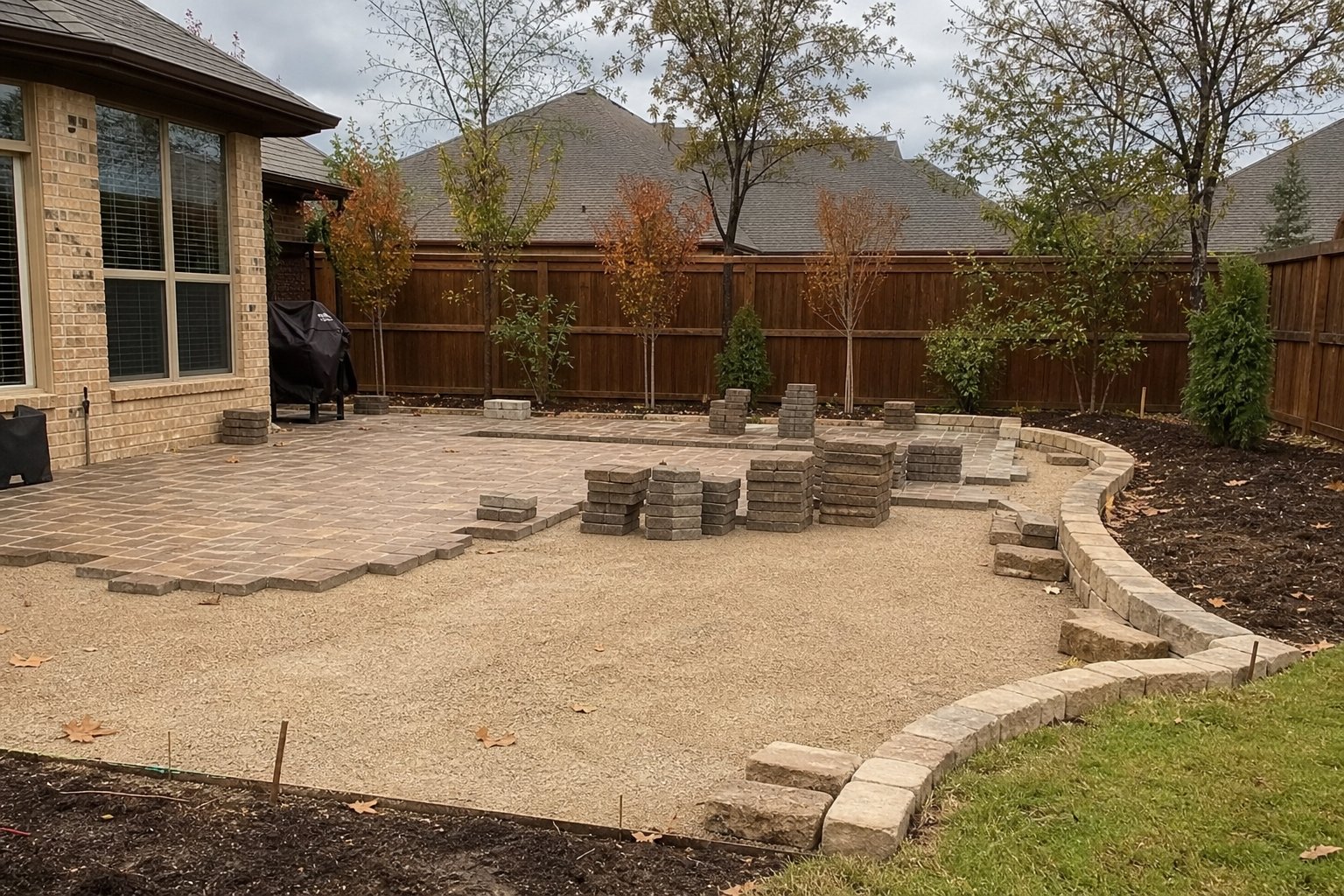
Fall is the best season to build a patio in DFW for three reasons. Clay soil is dry and stable for base preparation, and temperatures sit in the curing sweet spot. Construction calendars also open up after the summer rush. Most homeowners think about patios in April, call in May, and land in a June construction queue during the worst building weather of the year. The homeowners who call in September get the opposite experience. October ground conditions in Fort Worth and Keller are the most workable of the year, and crews are coming off peak season. The finished space is ready before the first holiday guest arrives. A patio is also the rare landscape project that winter cannot hurt. Here is why the season matters to the finished product, not just the schedule.
Dry Fall Soil Makes a Better Base
Every paver patio lives or dies by its base, and the base is built in whatever soil conditions the calendar provides. North Texas clay swells when wet and shrinks when dry, so the goal is compacting base material over soil at stable moisture. October and November deliver that window more reliably than any other months. Spring excavation in Grapevine or Flower Mound often means working mud, and mud never compacts honestly.
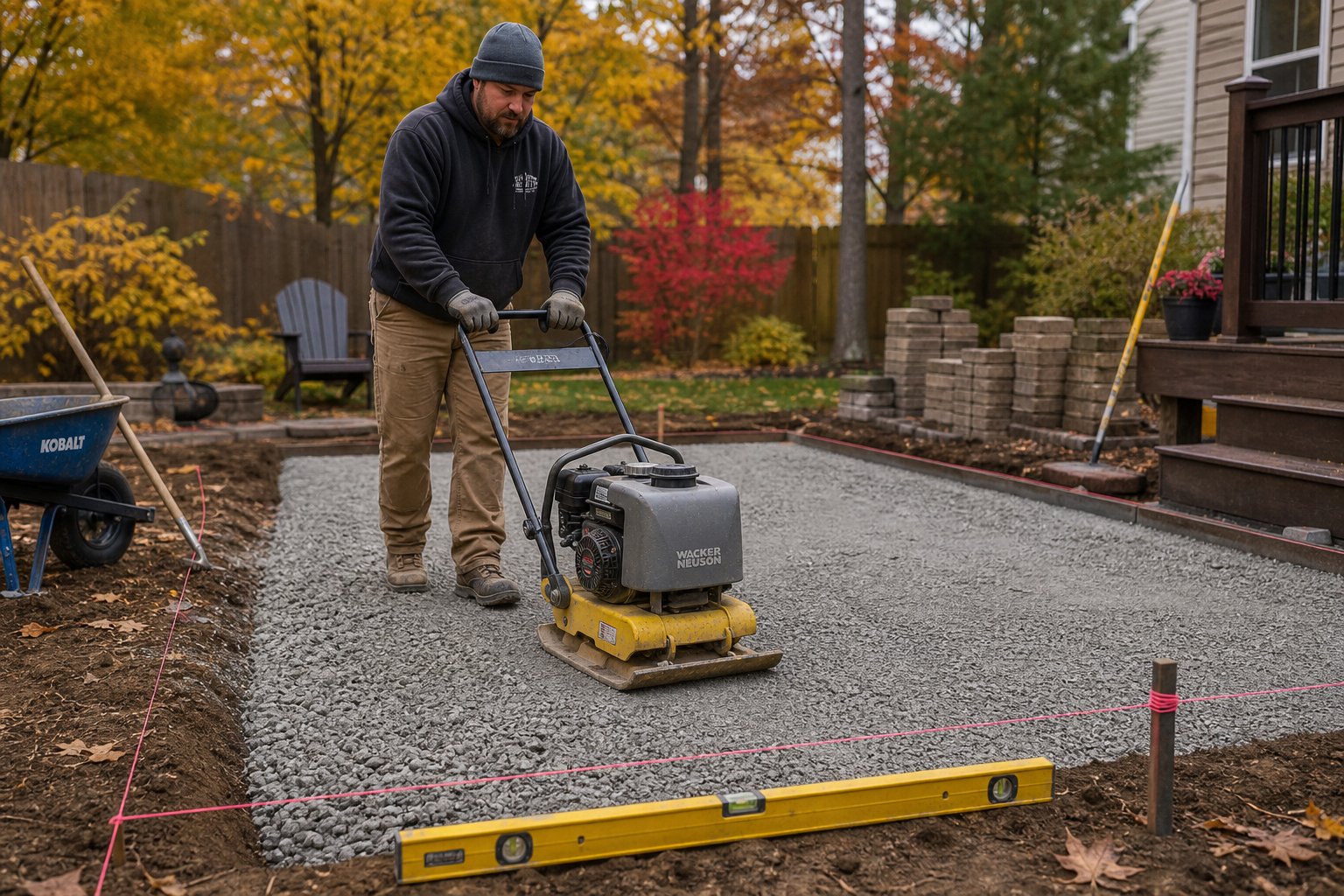
A proper fall base sequence runs: excavate 7 to 9 inches, compact the subgrade, add geotextile fabric over the clay, then compact crushed stone in 2-inch lifts. Done in dry October soil, that base stays put through decades of freeze-thaw cycles.
Curing Weather Is on Your Side
Concrete, mortar, and polymeric joint sand all have temperature preferences, and fall matches them. Concrete cures strongest between roughly 50 and 85 degrees. August pours in Tarrant County flash-dry on the surface and demand constant misting, while January pours risk freeze damage in the first 24 hours. October work needs neither rescue plan.
Masonry mortar for outdoor fireplaces and seat walls behaves the same way. Cooler air lets it hydrate slowly, and slow hydration builds strength. The stonework on a fall-built fireplace in Southlake is measurably better positioned for a long life than the same work rushed through a 105-degree week.
What about building in winter instead?
Winter works too, and December through February is a legitimate second window for hardscape in North Texas. Crews work most mild winter days, and dormant lawns take less damage from equipment traffic. The tradeoffs are occasional freeze pauses and shorter daylight. Fall gets the nod because it combines winter's open schedules with longer days and nearly zero weather stoppages. The full case for cool-season builds gets its own guide in December.
The Fall Timeline That Beats the Holidays
Working backward from Thanksgiving makes the schedule concrete:
- Late September: design consultation, material selection, and quote.
- Early October: permits and HOA approval where needed, materials ordered.
- Mid-October: excavation, base construction, and hardscape installation.
- Early November: lighting, seating, planting around the new space, and final walkthrough.
- Thanksgiving: dinner moves outside to the fire pit.
Ellis Landscape Services has built patios and outdoor living spaces across Tarrant County since 2011, from North Richland Hills family backyards to Westlake estates. Fall construction dates book from September consultations, and the calendar fills front to back.
Material lead times favor fall too. Popular paver lines and natural stone that back-order six weeks in April sit in stock at DFW suppliers through October and November. Selections made at a September consultation arrive before the excavator does, which keeps the schedule honest from the first day.
Fall Patio Construction FAQ
How long does a patio project take in DFW?
A straightforward paver patio takes about one to two weeks from breaking ground to finished surface. Add time for outdoor kitchens, fire features, or pergolas. Fall projects usually run faster than spring ones because rain delays are fewer and crews are not stretched across peak-season backlogs.
Does concrete and mortar work cure properly in fall weather?
Fall is actually the sweet spot. Concrete and mortar cure best between roughly 50 and 85 degrees, which matches October and November days in Tarrant County. Summer pours dry too fast and can weaken, while hard-freeze days pause work. Cool, dry fall weather produces the strongest results.
Is a fall-built patio ready to use for the holidays?
Usually, yes. A project started in early October is typically complete with weeks to spare before Thanksgiving. Pavers are usable almost immediately after installation, and poured concrete reaches practical strength within about a week. Fire features make the new space comfortable straight through winter.
Does Ellis Landscape Services build patios and outdoor living spaces?
Yes. Ellis Landscape Services designs and builds patios, outdoor kitchens, pergolas, and fire features. Service covers Fort Worth, Keller, Southlake, and the rest of the Tarrant County area. Fall consultation slots lead directly into construction dates before the holiday season.