
Commercial irrigation in Fort Worth follows a short set of rules. Non-residential sites may run sprinklers only on Tuesday and Friday, never on Monday, and never between 10 a.m. and 6 p.m. Every commercial system needs rain and freeze sensors with a yearly inspection. Backflow assemblies on commercial property are tested every year by a tester registered with the city. Irrigation work must be done or supervised by someone licensed by the Texas Commission on Environmental Quality (TCEQ). Drought stages can tighten all of this, so check the city's current stage before changing a controller.
This guide is for property managers, HOA boards and facility teams in Fort Worth and across Tarrant County. Each rule below was checked on an official City of Fort Worth or TCEQ page on November 22, 2026. Each one links to its source. Ellis Landscape Services is a Fort Worth landscaping company, and its founder, Keir Hamlin, is TCEQ Licensed Irrigator #20021. Other Tarrant County cities write their own watering rules, as explained further down.
Ready to transform your North Texas landscape? Call Ellis Landscape Services at (817) 709-9599 or email info@ellisdfw.com to request your free consultation. Ellis has served DFW since 2011 and is licensed and insured.
The Rules at a Glance
The table sums up the main rules for a commercial site on Fort Worth water. Details and sources follow in each section.
| Topic | The rule | Set by |
|---|---|---|
| Watering days | Tuesday and Friday for non-residential sites, including apartments, businesses, parks and common areas | City of Fort Worth |
| Watering hours | No sprinklers or irrigation systems between 10 a.m. and 6 p.m.; hand-held hoses any time | City of Fort Worth |
| Monday | No watering | City of Fort Worth |
| Rain and freeze sensors | Required on all commercial systems, with an annual inspection | City of Fort Worth |
| Backflow testing | Commercial-class irrigation backflow assemblies tested every year by a registered tester | City of Fort Worth |
| Permits | A city permit to install a system or alter 20 percent or more of one | City of Fort Worth |
| Licensing | Irrigation work done or supervised by a TCEQ licensed irrigator | State of Texas (TCEQ) |
| Design | A site-specific irrigation plan and the design rules in 30 TAC Chapter 344 | State of Texas (TCEQ) |
| Drought stages | Stage rules can cut sprinkler watering to once a week or stop it | City of Fort Worth drought plan |
Fort Worth Watering Days and Hours for Commercial Properties
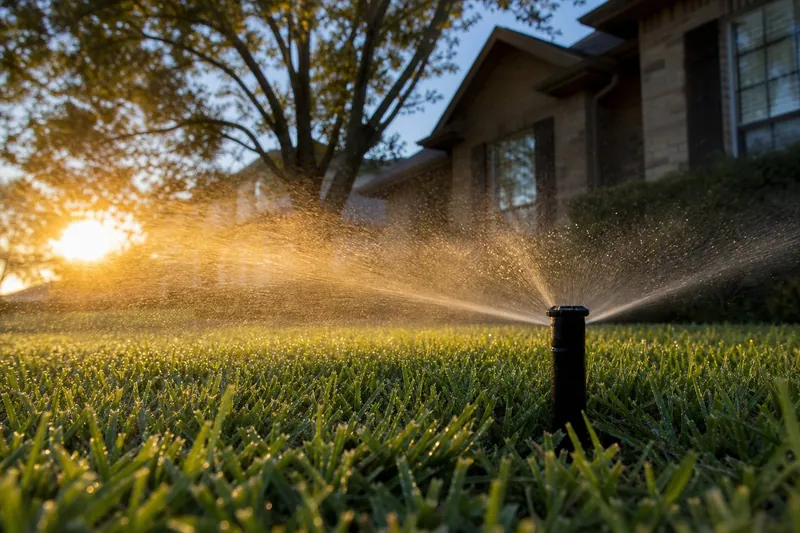
Fort Worth's year-round outdoor watering requirements give every address two watering days a week. Non-residential sites water on Tuesday and Friday. The city puts apartments, businesses, parks and common areas in that group. So HOA common-area turf and beds follow the Tuesday and Friday schedule, even when the homes around them do not.
- Monday: no watering for anyone.
- Tuesday and Friday: non-residential sites.
- Wednesday and Saturday: residential addresses ending in 0, 2, 4, 6 or 8.
- Thursday and Sunday: residential addresses ending in 1, 3, 5, 7 or 9.
Irrigation systems and sprinklers may not run between 10 a.m. and 6 p.m. on any day. Hand-held hoses may be used at any time. Systems may not run during rain. Water may not be wasted through runoff or through missing, misaligned or broken heads.
The city allows a few exceptions. An approved variance allows watering for up to 30 consecutive days to establish new hydromulch, sod or seed. Maintenance, repair and testing of a system are exempt, and so is dust control on sport fields. Wells, Trinity River water and reclaimed water are exempt once the source is registered with the city.
What a violation costs
Each violation adds an administrative fee to the next water bill: $25 for the first, $50 for the second and $75 for the third. A fourth brings a citation and a meter lockout. Since July 2024, the city has mailed yellow conservation notice postcards based on MyH2O data. They go to customers suspected of watering on Monday, between 10 a.m. and 6 p.m., off their days, or three or more times a week.
The city's irrigation page names two common causes. A cycle that starts late at night can run past midnight into the next day. A controller can also reset after a power outage. For a manager, a postcard is a cue to check the days, start times and clock.
Irrigation System Requirements in Fort Worth
Fort Worth also sets equipment and paperwork rules. These cover the system itself, not just the days it runs. The main ones are on the city's irrigation system requirements page.
Rain and freeze sensors
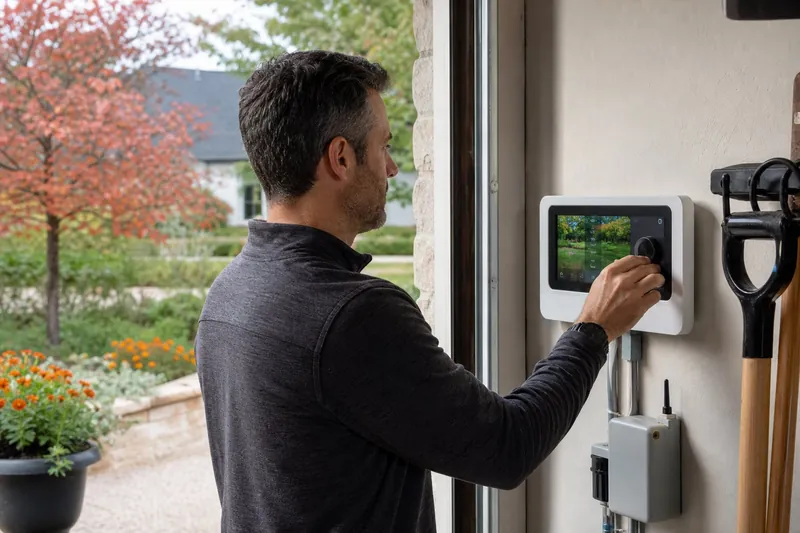
Rain and freeze sensors are required on every system installed on or after June 1, 2007. All commercial irrigation systems must have them, and the sensors need an annual inspection. The city says that inspection can be done at the same time as the annual backflow inspection. New sensors, or sensors added to an older system, need a city permit pulled by a licensed irrigator or Master Plumber.
Backflow prevention testing
Any irrigation system tied to drinking water needs an approved backflow assembly. A city-registered tester must test it when it is installed or repaired. According to the city's backflow and cross-connection page, commercial-class irrigation backflow assemblies are tested every year. The city requires annual testing of all backflow assemblies on commercial property.
Testers are independent contractors, not city staff. They enter results in the online Envirotrax system run by Vepo, LLC, and an incomplete or inaccurate report there leads to a failed inspection. The city's line for annual testing and enforcement is 817-392-8007.
Permits and the irrigation plan
Installing a system in Fort Worth or its extraterritorial jurisdiction needs a permit from Development Services (817-392-2222). So does altering an existing system by 20 percent or more. Before the work starts, the irrigator must prepare an irrigation plan, and a copy must be on site during installation.
The plan is drawn to scale and carries the irrigator's seal, signature and date. It shows complete coverage, zone flow, controllers and sensors, the backflow assembly, valves, piping and design pressure. At the end of the job, the irrigator walks the owner through the system. The owner signs a maintenance checklist and gets a copy of the plan. The irrigator's details go on each controller in waterproof form.
What the property file should hold
Those rules leave a paper trail. Keeping it in one place makes annual inspections, and any handover to a new manager, much easier.
- The sealed irrigation plan or as-built drawing
- The signed maintenance checklist from the final walk-through
- The permit for the installation or any major alteration
- Each year's backflow test report and sensor inspection
- The written, sealed record of every repair (see the TCEQ rules below)
- The irrigator's name and license number, matching the controller label
Ready to transform your North Texas landscape? Call Ellis Landscape Services at (817) 709-9599 or email info@ellisdfw.com to request your free consultation. Founder Keir Hamlin is TCEQ Licensed Irrigator #20021.
Texas TCEQ Rules Every Commercial System Must Meet
The state sets the floor under every city's rules. TCEQ regulates landscape irrigation under Title 30, Texas Administrative Code, Chapter 344. TCEQ's guide for property managers adds that cities of more than 20,000 people must adopt their own irrigation ordinances.
Who must hold a license
Under TCEQ's licensing rules, a license is needed to sell, design, install, maintain, alter, repair, service, inspect or consult on an irrigation system. Some exemptions apply. TCEQ issues three licenses:
- Landscape Irrigator: may do all of that work, including connecting a system to any water supply.
- Irrigation Technician: may connect a system and install backflow devices, and works under a licensed irrigator's supervision.
- Irrigation Inspector: checks permits, systems and backflow devices for a city or water district.
To be licensed, an irrigator completes at least 32 hours of state-approved training and passes an exam and a background check. Licenses last three years. A Landscape Irrigator renews with 24 hours of continuing education. A business owner without a license may offer irrigation services only by employing a licensed irrigator as the irrigator in charge.
Chapter 344 basics in plain words
Chapter 344 sets design, installation and repair standards. The table lists the points a property manager is most likely to see on a bid or an inspection. Section numbers come from TCEQ's quick reference guide to Chapter 344 and the rule text.
| Topic | What Chapter 344 says | Section |
|---|---|---|
| Irrigation plan | A site-specific plan for each new system, on the job site during installation, showing complete coverage | 344.61 |
| Zones | Separate zones based on plant type and microclimate factors | 344.62(e) |
| Narrow strips | No above-ground spray devices on new systems in landscapes less than 48 inches wide | 344.62(b)(2) |
| Hardscape | Spray and rotor heads aim away from paving and sit at least four inches from it; no spraying on or over concrete, asphalt, walls, sidewalks or streets | 344.62(b)(3) and (g) |
| Rain and moisture | Sensors or other technology that interrupt the system | 344.62(j) |
| On-site supervision | A licensed irrigator or licensed technician on site at all times during installation | 344.62(o) |
| Backflow | Tested by a licensed tester at installation, repair, replacement or relocation; results sent to the water supplier within ten business days | 344.50(e) and 344.52(c) |
| Chemicals | Fertilizer or other chemicals added through the system need a reduced pressure principle assembly or an air gap | 344.51(a) |
| Repairs | A written, sealed document listing the work done and the materials used | 344.72(c) |
| Records | The irrigator keeps records for three years | 344.38 |
Drought Stages: Check the Current Stage First

Fort Worth's Drought Contingency and Emergency Water Management Plan was adopted April 23, 2024, and took effect May 1, 2024. It has three stages that tighten watering step by step. This guide does not state the current stage. The plan says stage changes are announced through local media and the city website, so check the city's water pages before setting a controller.
| Stage | Sprinkler and irrigation watering | Other points for commercial sites |
|---|---|---|
| Stage 1, Water Watch | Twice a week; non-residential sites on Tuesday and Friday; none from 10 a.m. to 6 p.m. | Hand-held hose, drip, soaker hose or tree bubbler any day and time; no irrigation during rain or at 32 degrees Fahrenheit or below; commercial users encouraged to audit their systems |
| Stage 2, Water Warning | Once a week, on a schedule set by the Water Director | New landscaping and turf discouraged; variances for new turf capped at 30 days |
| Stage 3, Emergency Water Use | Landscape watering prohibited, except by hand-held hose, soaker hose or drip | No new landscaping; commercial users must cut use by a percentage the Water Director sets |
The plan lists these as measures the City Manager may order, so a declared stage may not use every one. Large sites have one useful option. In Stages 1 and 2, the Water Director may grant a variance for a large multi-station system. It applies when the property cannot be watered with an average of three-quarters of an inch in one day. The property is then split into sections watered on different days, and no station runs more often than the stage allows.
Penalties also rise with each stage. In Stage 2, a second violation involving an irrigation system leads to that system being disconnected. In Stage 3, the first such violation does.
Nearby cities on Fort Worth water
The plan lists Keller, North Richland Hills, Roanoke, Southlake, Trophy Club MUD #1 and Westlake among Fort Worth's wholesale water customers. Under their contracts, they must apply the same rationing and restrictions while Fort Worth supplies any of their water. In Stage 1, each may set its own day schedule, as long as it stays at twice a week.
Other Tarrant County Cities Set Their Own Rules
Fort Worth's days, hours and permit steps apply to Fort Worth water customers. Grapevine, Colleyville, Keller, Southlake and other Tarrant County cities write their own irrigation rules. Texas requires every city over 20,000 people to adopt an irrigation ordinance, and smaller cities and water districts may choose to. Watering days, permits and inspections can differ from city to city.
This guide covers Fort Worth and state rules only. For a property in another city, check that city's water department page. TCEQ also advises asking the irrigator whether the system meets all state and local codes, including current day-of-week and time-of-day limits.
Commercial Sprinkler Maintenance in DFW: A Seasonal Checklist
The checklist below is general guidance, not a city rule. It ties routine sprinkler checks to the rules above, so problems surface before a fee or a dead bed. The city's irrigation page also passes on Texas A&M AgriLife guidance: apply about one inch of water at a time. In summer that means every 5 to 7 days, in spring and fall every 10 to 15 days, and in winter every 15 to 20 days.
Spring
- Run every zone and look for broken, sunken or tilted heads.
- Check that no head sprays the parking lot, sidewalk or street.
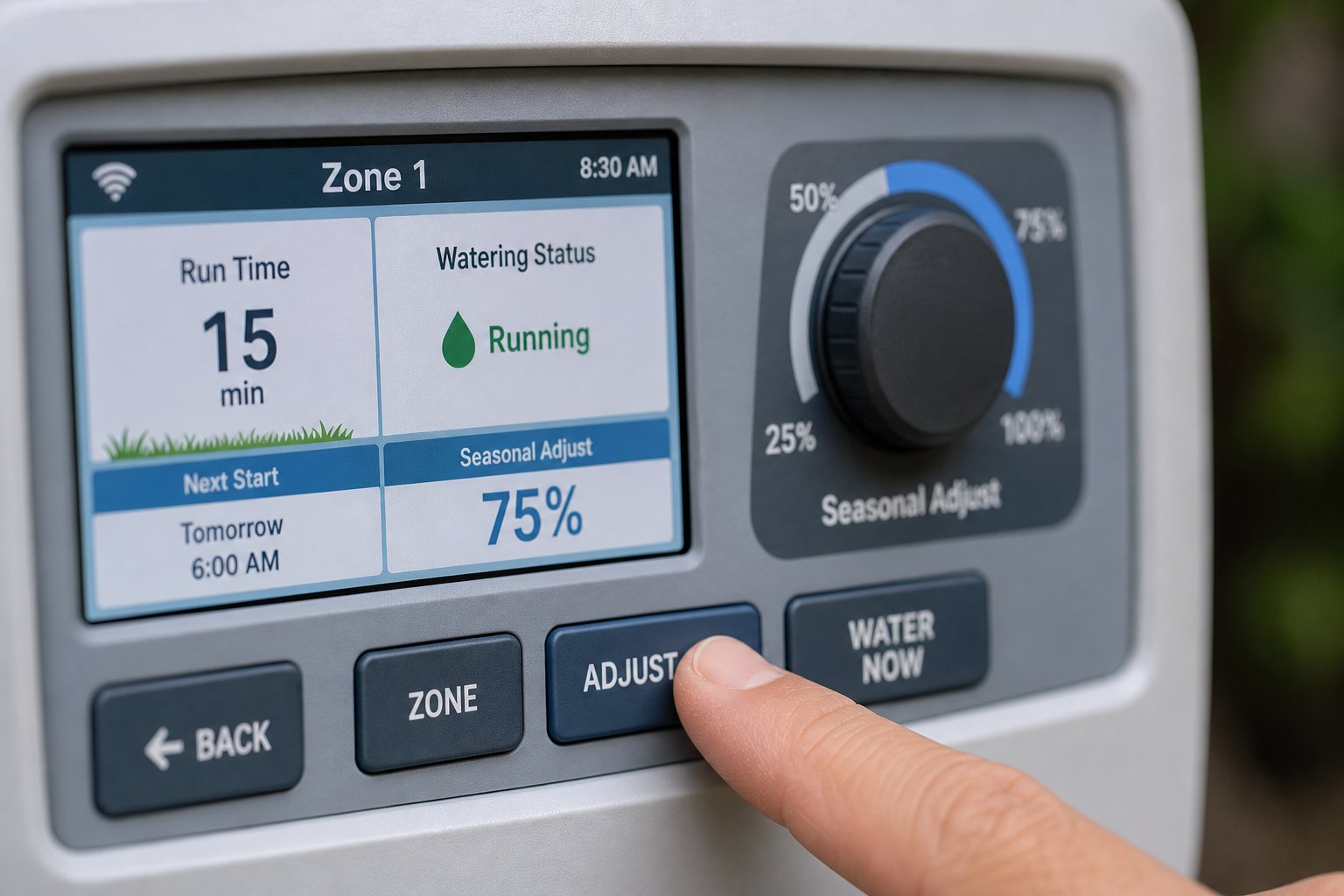
- Confirm the controller shows Tuesday and Friday, with no start times between 10 a.m. and 6 p.m.
- Book the annual backflow test and the sensor inspection together.
Summer
- Watch for runoff and puddles after each cycle.
- Use cycle-and-soak: shorter runs, repeated, so the soil can take in the water.
- Clear heads blocked by grown turf or shrubs.
- Make sure late-night cycles end before midnight.
Fall
- Cut run times as temperatures drop.
- Test the rain and freeze sensors before the first cold front.
- Look for leaks at valves and wet spots that never dry.
Winter
- Confirm the freeze sensor stops the system in cold weather.
- Recheck the controller's days and clock after any power outage.
- Remember that a smart controller still has to follow the assigned days.
For homeowner-level detail on the same seasons, see the summer lawn care and watering rules guide and the North Texas winter irrigation guide.
Hiring a Licensed Irrigator in Fort Worth: What to Ask
A bid tells a lot before any trench is dug. TCEQ's property manager guide says bids, invoices and warranties should show the irrigator's name, license number, business address and phone number. Ask these questions before signing:
- What is the irrigator's TCEQ license number? Check it on the TCEQ license search.
- Is the number on the work vehicles? Chapter 344 calls for "LI" and the number in block letters at least two inches high, on both sides.
- Who will be on site during installation, and are they licensed?
- Who pulls the Fort Worth permit, and does the job need one?
- Will the job end with a sealed plan or as-built, a signed maintenance checklist and a controller label?
- Who tests the backflow assembly? It must be a licensed tester registered with the city.
- Will every repair come with a written, sealed record of work and materials?
- Is there a written contract with the TCEQ statement, proof of insurance and written change orders?
TCEQ warns that people doing irrigation work without a license often lack insurance. That can leave the property owner liable for damage to people and property. Ellis Landscape Services founder Keir Hamlin is TCEQ Licensed Irrigator #20021, and that number can be checked on the same TCEQ search. Ellis handles irrigation and drainage as part of its commercial landscaping services across its North Texas service area.
"Treat the irrigation controller like part of the property file. Check its days and hours every season, and again after any power outage." Keir Hamlin, founder, Ellis Landscape Services
Questions Property Managers Ask
Can a commercial property in Fort Worth water on weekends?
Not with sprinklers or an irrigation system. Non-residential sites use Tuesday and Friday. A hand-held hose may be used at any time, and the city can grant a variance to establish new sod or seed.
Do HOA common areas follow the residential schedule?
No. The city lists common areas with apartments, businesses and parks as non-residential sites, which water on Tuesday and Friday.
How often must a commercial backflow assembly be tested?
Every year, and also after installation, repair or relocation. The tester must be licensed and registered with the City of Fort Worth.
Does a smart controller change the watering days?
No. The city says smart controllers and weather sensors can adjust schedules, but every customer must still water only on assigned days.
Ready to transform your North Texas landscape? Call Ellis Landscape Services at (817) 709-9599 or email info@ellisdfw.com to request your free consultation. Ellis has served DFW since 2011, and Keir Hamlin brings 25+ years in the green industry.