
To choose a commercial landscaping contractor in North Texas, ask eight questions before you sign. They cover Texas licenses, insurance, scope and visit schedule, extra work approval, reporting, storm response, local water rules and references. A good contractor answers each one in writing, with a license number, a certificate or a schedule. A vague answer is a warning sign.
This guide is for property managers, HOA boards and business owners comparing bids in Tarrant County and western DFW. Each question explains what a good answer looks like and why it matters here. Where Ellis Landscape Services fits an answer with a confirmed fact, the guide says so. For what Ellis offers, see its commercial landscape services page.
What to Ask Commercial Landscapers in North Texas: The 8 Questions at a Glance
Use this table to compare bids side by side. Each row is explained in its own section below.
| Question | A good answer | A red flag |
|---|---|---|
| 1. Which Texas licenses cover the work? | Names the TCEQ licensed irrigator and the TDA licensed applicator, with license numbers | "Fully licensed" with no names or numbers |
| 2. Is the insurance current? | Sends current certificates and says plainly whether it carries workers' compensation | No certificate, or one that has expired |
| 3. What is in the scope? | A written scope by area, with a seasonal visit calendar | "Full service" with no list of tasks |
| 4. Who approves extra work? | A written estimate and your sign-off before extra work starts | Extra charges that first appear on the invoice |
| 5. How will they report? | One named contact and a set way to report each visit | No named contact |
| 6. What happens after a storm? | A written plan: safety first, then cleanup, then repairs, with pricing agreed ahead | No plan until the storm hits |
| 7. How do they follow water rules? | Knows each city's watering days and sensor rules, and who pulls permits | Sprinklers running at midday or on the wrong days |
| 8. Who can vouch for them? | References from similar properties nearby that you can call | No references, or only ones from far away |
Ready to transform your North Texas landscape? Call Ellis Landscape Services at (817) 709-9599 or email info@ellisdfw.com to request your free consultation. Ellis has served DFW since 2011, and founder Keir Hamlin is TCEQ Licensed Irrigator #20021.
1. Which Texas Licenses Cover the Work?
Two state licenses matter most on a commercial site: a TCEQ irrigation license and a TDA pesticide license. Ask which people hold them, and get the numbers in writing.
Irrigation: a TCEQ licensed irrigator
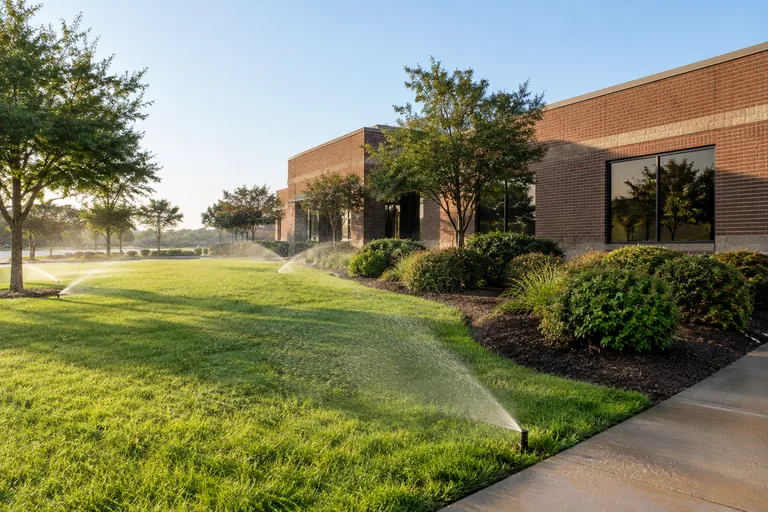
Texas requires landscape irrigators to be licensed to design, install, repair or connect an irrigation system to the public water supply. The Texas Commission on Environmental Quality (TCEQ) regulates them under 30 TAC Chapter 344. To get licensed, an irrigator completes at least 32 hours of state-approved training and passes an exam and a background check.
The TCEQ guide for property managers gives three checks:
- Bids, invoices and warranties for irrigation work show the irrigator's name, license number, business address and phone number.
- The license number is displayed on the vehicles used for irrigation work. If it is not, ask to see the license.
- The irrigator can tell you whether your system meets state and local codes, including day of the week and time of day limits.
You can check any number through the license search linked from the TCEQ Landscape Irrigation Program page. Where Ellis fits: founder Keir Hamlin is TCEQ Licensed Irrigator #20021.
Weed and pest control: a TDA license
The Texas Department of Agriculture (TDA) says applicators who apply pesticides to ornamentals, trees, lawns or weeds for hire must be licensed by TDA. That includes general-use products. A few points help when you compare bids:
- Ask for the TDA license number of the person who will apply weed or pest control on your property.
- Applicators who apply only fertilizer do not need a TDA license, so ask which products the bid includes.
- TDA requires its decal on each vehicle an applicator business uses for landscape maintenance applications.
- TDA also requires an applicator business to register and show proof of liability coverage.
If a bidder hands this work to a subcontractor, ask for that company's license number too. Details are on the TDA page on applying pesticides to lawns, trees and ornamentals.
Ready to transform your North Texas landscape? Call Ellis Landscape Services at (817) 709-9599 or email info@ellisdfw.com to request your free consultation. Ellis is licensed and insured, and its founder brings 25+ years in the green industry.
2. Are Their Insurance Certificates Current?
Ask each bidder to send current certificates of insurance before you sign, not after. Check the dates, the coverage types and the business name on each one.
Texas has one twist worth knowing. The Texas Department of Insurance says workers' compensation is not required for most private employers. So ask each bidder directly whether it carries it. The TDI coverage verification page links to an online lookup.
A complete answer usually covers:
- General liability, for damage to people and property on your site.
- Commercial auto, for the trucks and trailers that park on your lots.
- Workers' compensation, or a plain written statement that the company does not carry it.
Why it matters: TCEQ warns that people doing irrigation work without a license often lack insurance. That can leave you and your company liable for damage to people and property. Ellis Landscape Services is licensed and insured; ask for its certificates the same way you would from any bidder.
3. What Is in the Scope, and How Often Will Crews Visit?
A good answer is a written scope, area by area, with a visit calendar that changes by season. Mowing in July and leaf work in November are different jobs, and the schedule should show it. The scope should name:
- Each area covered, such as turf, beds, trees, parking islands, entrances and common areas.
- Each task and how often it happens, such as mowing, edging, pruning, bed care and cleanup.
- What is not included, so nothing is assumed.
- A site map with the areas marked, if the property is large.
Keep the first meeting simple: walk the site together and agree on the list. For ongoing care, see Ellis's landscape maintenance service.

4. Who Approves Extra Work, and How Is It Priced?
The best answer names one approver on your side and a written estimate before any extra work starts. Extra work means anything outside the scope, such as new plants, irrigation repairs or storm cleanup. Settle these points before you sign:
- Who on your side can approve extra work, and up to what amount.
- How the estimate arrives: in writing, with photos where they help.
- How long a quoted price holds.
- How approved extra work shows on the invoice.
If an HOA board votes on larger spending, build that time into the approval step. Ellis does not quote flat prices. It offers a free consultation and a custom quote instead.
5. How Will They Communicate and Report?
A good answer gives you one named contact and a set way to hear about each visit. That might be a short visit note, photos of problems, or a regular walk-through together. Ask:
- Who is your contact, and who covers when that person is away?
- How do you report a problem, and when should you hear back?
- Will the crew flag leaks, dying plants or tree hazards in writing?
- How often will you walk the property together?
Why it matters: a property manager may only see a site now and then. The report is how problems reach you before tenants, customers or residents notice them.
"Before you sign, ask who you call when something looks wrong. Get that name and number in writing."Keir Hamlin, Founder, Ellis Landscape Services
6. What Happens After a Storm?
A good answer is a written storm plan, agreed before storm season. It says what the crew does first, how cleanup is priced and how damage is reported. A sound plan runs in this order:
- Make the site safe: clear fallen limbs from walkways, drive lanes and entrances.
- Check the irrigation for broken or misaligned heads, which waste water and, in Fort Worth, break the city's watering rules.
- Report damage with photos, so you can decide on repairs and insurance claims.
- Price the cleanup by the rule set in the contract, not by surprise.
Ask whether storm cleanup is part of the regular price or billed as extra work. Either can be fine. The point is to know before the storm, not after it.
7. Do They Follow Local Water Rules?
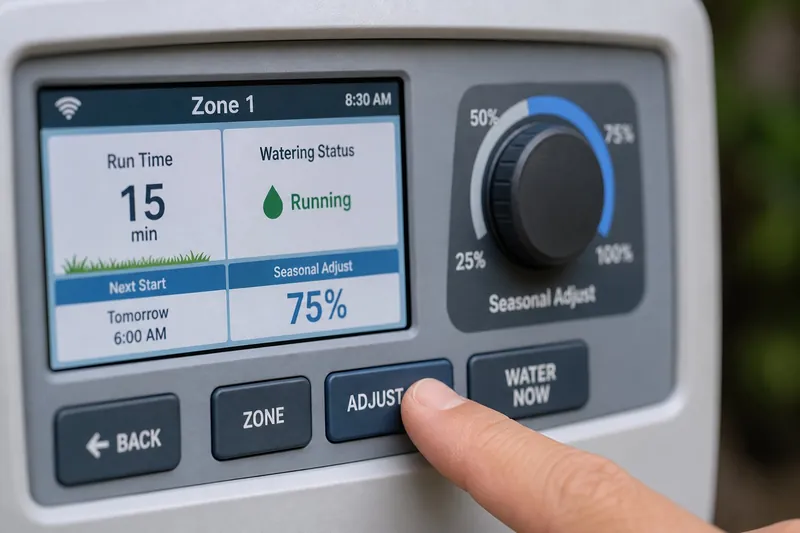
A good contractor knows the watering rules for every city your property sits in and sets the controllers to match. TCEQ notes that Texas cities over 20,000 people must have local landscape irrigation ordinances. So the rules can change from one city to the next.
Fort Worth's year-round watering rules are a clear example. For non-residential sites, which include businesses, apartments, parks and common areas, the city sets these rules:
- Watering days are Tuesday and Friday.
- No watering is allowed on Monday.
- No watering by irrigation systems or sprinklers between 10 a.m. and 6 p.m.
- No water waste through runoff, or through missing, misaligned or broken sprinkler heads.
- Rain and freeze sensors are required on all commercial irrigation systems, with a yearly inspection.
- A new sensor or retrofit needs a city permit obtained by a licensed irrigator or Master Plumber.
If your property is in Keller, Southlake or another nearby city, ask the bidder which rules apply there. Ellis offers irrigation and drainage solutions, and its founder is a TCEQ licensed irrigator. For more on local limits, read the Tarrant County watering rules guide.
8. Who Can Vouch for Their Work Nearby?
A good answer is a list of references from properties like yours, in or near your city, that you can call. Years of local work help too, because local soils, heat and watering limits take time to learn. When you call a reference, ask:
- Would you hire this contractor again?
- How did they handle a problem or a missed visit?
- Did extra charges match the approved estimates?
- How quickly did they answer when you called?
Ellis Landscape Services has served DFW since 2011, and founder Keir Hamlin has 25+ years in the green industry. Its service area covers 12 cities, including Fort Worth, Keller, Southlake, Grapevine and Flower Mound. Read more about Ellis and its founder.
Finding the Best Commercial Landscaping Fit in DFW: A Bid Checklist
The best commercial landscaping choice in DFW is not always the lowest bid. It is the bidder whose answers you can check. Before you sign, collect these:
- The irrigator's name and TCEQ license number, checked on the state search.
- The TDA license number for whoever applies weed or pest control.
- Current insurance certificates, and the workers' compensation answer in writing.
- A written scope with a seasonal visit calendar.
- The extra work approval rule, with a named approver.
- The contact's name and how each visit is reported.
- The storm plan and how cleanup is priced.
- The watering schedule for each city the property sits in.
- Two or three references you have called yourself.
Lay the bids side by side and mark each answer. Gaps show up fast. Ellis Landscape Services is licensed and insured, and founder Keir Hamlin is TCEQ Licensed Irrigator #20021.
Ready to transform your North Texas landscape? Call Ellis Landscape Services at (817) 709-9599 or email info@ellisdfw.com to request your free consultation.