
Real fall color is possible in North Texas, but it comes from choosing the right species: Texas red oak, Chinese pistache, and cedar elm carry the canopy. Gulf muhly and little bluestem light up beds, oakleaf hydrangea and sumac cover the shrub layer, and possumhaw holly adds berry color after leaf drop. The default DFW landscape goes brown in November because it was never designed for autumn. The trees that color reliably in Tarrant County clay are a specific list. Most were skipped by production builders in favor of fast growers that fade to tan. The fix is additive. A few right plants, placed where low October sun hits them, change everything. A Fort Worth or Southlake yard gains six weeks of color that neighbors assume required a trip to Arkansas. Here is the palette, layer by layer.
Canopy Layer: Trees That Actually Turn
Fall color in trees is chemistry, and some species simply carry better pigments than others. The proven performers for North Texas clay:
- Texas red oak: the region's best scarlet-to-burgundy display, on a tough native adapted to alkaline clay.
- Chinese pistache: dependable orange-red even in warm autumns, drought-tough, and sized right for suburban lots.
- Cedar elm: clear golden yellow on the most clay-tolerant shade tree in the region.
- Bald cypress: feathery copper-rust before needle drop, ideal for damp spots and pond edges.
- Crape myrtle: already in most yards, and its orange-red fall foliage is a bonus season after summer bloom.
Color intensity varies year to year with rain and cool nights, but these five show up every autumn.
Bed Layer: Grasses and Shrubs That Peak in October
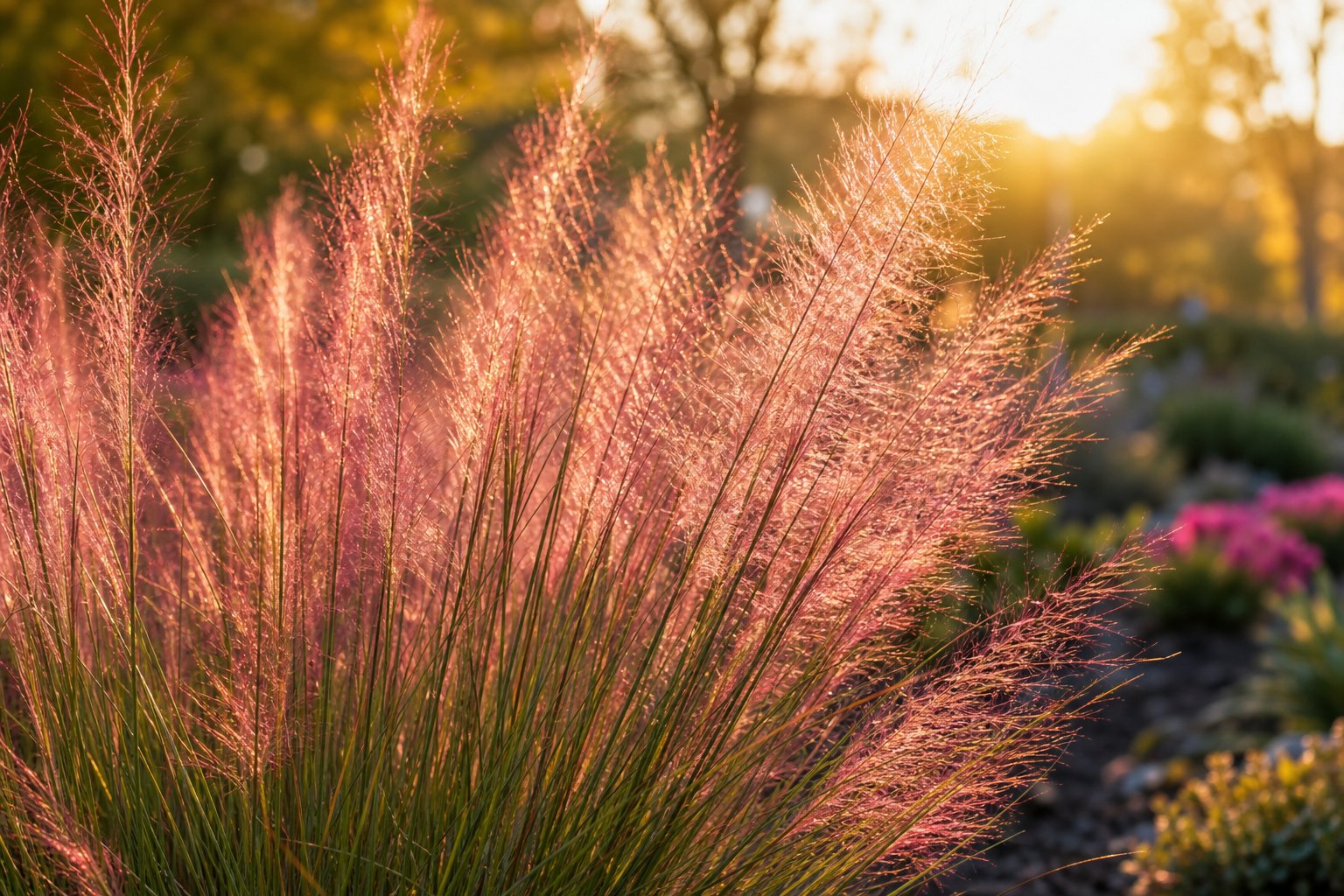
Ornamental grasses do their best work in fall, and two natives anchor the season. Gulf muhly throws pink plume clouds in October that stop foot traffic, especially planted in drifts of three to seven where afternoon sun backlights them. Little bluestem turns copper-red and stands through winter. Around them, oakleaf hydrangea goes deep burgundy in part shade. Flameleaf sumac earns its name on dry slopes, and American beautyberry carries purple fruit clusters into the cold.
What keeps color going after the leaves fall?
Berries and bark carry December. Possumhaw holly, a native deciduous holly, drops its leaves and reveals branches loaded with orange-red berries that persist all winter. Yaupon holly does the same on an evergreen frame. Add crape myrtle's cinnamon bark and the winter plumes of ornamental grasses. The landscape stays interesting straight through to the pansy season covered in the fall color-bed guide.
Placement Rules That Multiply the Show
Planting the palette takes one fall afternoon per layer:
- Set the tree first, where evening sun will backlight it.
- Group grasses in odd-numbered drifts along the bed front.
- Tuck shrubs and berry plants against evergreen or fence backdrops.
Where a plant stands matters nearly as much as what it is. Fall sun rides low. Color trees planted on the west or southwest side of a yard in Grapevine or Colleyville glow when families are actually home in the evening. Dark backgrounds double the effect: red oak against an evergreen screen or a dark fence reads twice as bright. Group grasses instead of scattering singles, and put berry plants where they show from windows, since December color is enjoyed mostly from indoors. Ellis Landscape Services builds these placement rules into fall designs across Tarrant County, and October consultations still catch this year's planting window.
Budget-wise, fall color is one of the cheapest design upgrades per square foot. A single Texas red oak, three gulf muhly, and one possumhaw cover the canopy, bed, and berry layers for a modest one-time cost. Every year the display gets bigger. Few landscape investments compound like autumn color.
Fall Color Planting FAQ
Which trees have the best fall color in North Texas?
Texas red oak leads with scarlet through burgundy, followed by cedar elm's clear gold, Chinese pistache's orange-red, and bald cypress's copper. Crape myrtles add orange and red on the small-tree scale. All handle Tarrant County clay and heat once established.
What is the pink grass blooming in October?
Gulf muhly, a native ornamental grass that erupts in pink, cloud-like plumes each October. It thrives in full sun, tolerates clay and drought, and reads best planted in groups of three or more. The plumes hold into November and backlight beautifully in late afternoon sun.
Can fall color plants still be planted this fall?
Yes. October and November are prime planting months in North Texas, since warm soil grows roots for weeks before the first freeze. A tree planted this month will show modest color now and a full display next fall. Container-grown shrubs and grasses establish on the same schedule.
Does Ellis Landscape Services design with native plants?
Yes. Ellis Landscape Services designs and installs landscapes across Fort Worth, Southlake, Keller, and its full Tarrant County service area. Natives and adapted plants are matched to each yard's sun, drainage, and soil. Fall installation slots run through November.